
If you run workspace strategy for an AI or ML team, you have probably already fielded this complaint: the engineers need quiet, the data team needs a locked door, the product managers need a room with a big screen a few times a week, and the coworking space you are paying for delivers none of it reliably.
An ML engineer who spends half the day talking out loud to an AI coding assistant cannot sit in an open quiet zone without getting side-eyed by the marketing freelancer one desk over. A data scientist reviewing model outputs on a client’s proprietary dataset cannot do that work in a glass-walled conference room next to the lobby. And when the team’s weekly model-review session gets bumped because the only bookable room was taken by a birthday lunch, nobody is laughing.
Key takeaway
AI teams need three types of space that most offices and standard coworking memberships fail to deliver at once:
- Acoustically private Focus Enclaves for deep technical work
- Physically Secure Rooms for proprietary data and models
- Bookable Collaboration Hubs for the high-frequency review sessions AI projects demand
This guide introduces a three-zone framework, walks through a realistic scenario for a 25-person AI startup, and includes pricing benchmarks from our Q4 2025 market data so you can budget accurately instead of discovering the gaps after you sign.
What Makes AI Workflows Different for Workspace Planning
AI workflows require three work modes where most offices only support two. Traditional office planning assumes people either work alone at a desk or meet in a group. AI teams add a third mode: solo work that is audible, interactive, and screen-intensive, yet still requires deep concentration. An engineer talking through a model’s output is doing focus work, but it sounds like a meeting. That is why open-plan “quiet zones” fail these teams: the work is cognitively solo but acoustically social.
AI work also introduces physical security requirements that go beyond standard IT policy. When a team is fine-tuning a model on proprietary data, the workspace itself becomes part of the compliance environment. A glass-walled conference room with a visible screen is a liability. A shared Wi-Fi network without segmentation is a data-exfiltration risk. The IT team can lock down the software stack, but if the physical space leaks information, the controls are incomplete.
McKinsey’s latest data shows roughly 88% of organizations now use AI in at least one business function. Private offices with lockable doors and dedicated ethernet were niche amenities two years ago. In markets like San Francisco and New York, where AI companies have received $103 billion in venture capital since 2020, demand for that kind of space is growing fast.
The Three-Zone Model for AI Workspace Planning
The three zones map to work modes rather than departments. Your ML engineer might move through all three in a single day. Cost ranges below reference our Q4 2025 pricing data. For context, the national median for a standard open-desk coworking membership is around $220 per person per month.
Zone 1: Focus Enclaves
- Purpose: Deep AI/ML work including prompt engineering, model evaluation, code review, and voice-interactive AI sessions
- Design requirements: Acoustic privacy with floor-to-ceiling walls, high-bandwidth wired internet, single-occupancy or two-person pods, no visual distractions
- Workspace type: Private offices or enclosed pods within coworking spaces; dedicated offices in office-sharing arrangements
- Cost range: $500 to $1,500+/month per private office in coworking; $300 to $800/month per workstation in office-sharing
Zone 2: Secure Rooms
- Purpose: Sensitive data handling, proprietary model review, compliance-bound discussions, client data processing
- Design requirements: Lockable door, opaque or switchable privacy glass walls, screen-privacy orientation, dedicated/isolated network connection (VLAN or hardwired ethernet), restricted access
- Workspace type: Dedicated private office suite or bookable secure room; office-sharing arrangements with tenant-controlled access
- Cost range: $800 to $1,500+/month for lockable private office; premium for dedicated network and access controls
Zone 3: Collaboration Hubs
- Purpose: Sprint planning, model review sessions, cross-functional brainstorming, pair programming, demos
- Design requirements: Large display or projector, whiteboard space, seating for 6 to 12, good audio for hybrid participants, bookable on short notice
- Workspace type: Bookable meeting rooms in coworking spaces; shared conference facilities in office-sharing; on-demand day passes for external participants
- Cost range: Typically included in coworking memberships or available at $30 to $75/hour; day passes average ~$30 for visiting collaborators
Focus Enclaves
An acoustically enclosed room where a person can speak at normal volume without being heard outside. Microsoft’s Work Trend Index found that 68% of people say they don’t have enough uninterrupted focus time, and for AI practitioners the problem is worse because their focus work is audible. Wired ethernet matters here too: model evaluation on flaky Wi-Fi turns a two-hour task into a four-hour one. Steelcase’s 2025 research on AI-ready workplaces recommends pairing these enclaves with “front porch” transitional areas that buffer the enclosed space from the open floor, so switching between focus and collaboration does not require relocating.
Secure Rooms
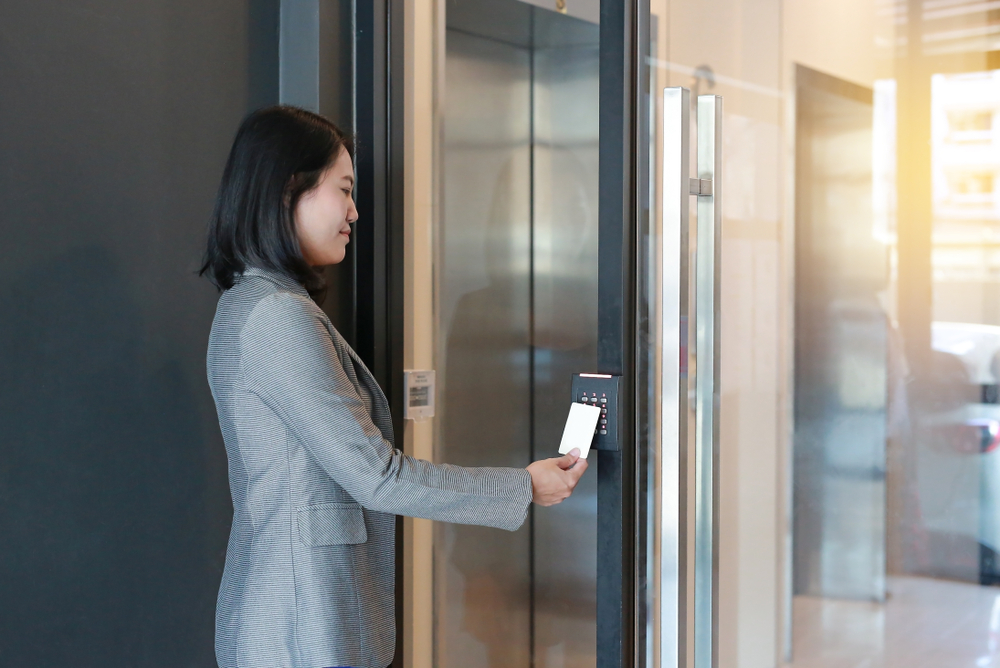
A lockable, opaque-walled space with screen-privacy orientation and, ideally, a dedicated network segment. This is the hardest zone to find in a coworking context, because the features that make a space feel inviting (glass walls, open sightlines) are the same features that create compliance exposure for teams handling regulated or proprietary data. For teams evaluating options, the comparison between coworking vs. office sharing matters most here: office-sharing arrangements give companies control over layout, access, and internal operations, while coworking spaces offer flexibility but often lack the physical isolation that compliance demands.
Collaboration Hubs
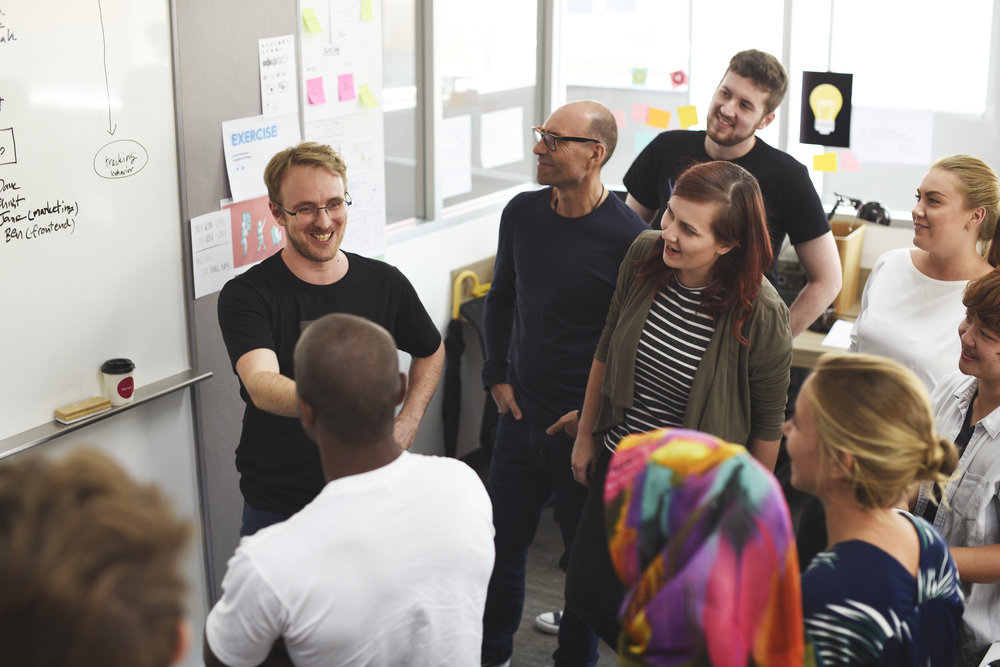
A bookable room with a large display, whiteboard surface, and seating for the full project team, available on same-day notice. The key word is “same-day.” AI teams may need these rooms daily during active sprints, and most coworking memberships assume weekly use. For teams that use a decision matrix for hybrid coworking days, model review and sprint planning typically fall into the “must be in-person” category, while individual model evaluation and prompt engineering can be effective asynchronously. Planning around that distinction helps teams avoid paying for collaboration space they only need three days a week.
AI Teams Are More Office-Dependent Than You Might Expect
According to CBRE’s data, AI companies’ employees are typically in the office four or more days per week, often requiring dedicated workstations rather than hot desks. CBRE projects AI-era office demand will generate 50% to 75% of the office space growth seen during the mobile-app era. There is a reason nobody has built a successful AI company where the ML team works entirely from coffee shops: you cannot debug a training pipeline on hotel Wi-Fi.
Understanding how hybrid work and AI workspace strategy intersect helps leaders avoid over-investing in open-plan square footage while under-investing in the zones that AI workflows actually require.
Scenario: A 25-Person AI Startup Outgrows Open Plan
This is a composite scenario, but every detail reflects patterns described in the research cited throughout this article.
A 25-person AI company on a standard coworking membership: ten ML engineers, five data engineers handling sensitive client datasets, six product and design staff, four in operations.
The ML engineers have started booking phone booths in two-hour blocks for focus work, but the booths are too small and too hot. The data team angles their monitors toward the wall. The weekly sprint review keeps getting bumped by a larger tenant.
- Option A: Upgrade within the same coworking space
Move engineers into four private offices ($500 to $1,500 each per month). Book a dedicated office as the secure room. Keep using bookable meeting rooms for sprints. No lease negotiation, immediate availability. The risk is that the operator may not offer network isolation or true screen-privacy rooms.
- Option B: Move to a dedicated office-sharing arrangement
Lease a private suite with focus zones, a secure room, and a collaboration area. Office-sharing workstations typically run $300 to $800 per month, plus buildout costs. Full control over access and network. Trade-off: longer commitment (typically 6 to 12 months).
- Option C: Build a hybrid portfolio
Private suite (four to five rooms) for the data team and ML leads. Product and operations stay on flexible coworking memberships at around $220 per person per month. Book meeting rooms for sprints.
For most AI startups at this stage, Option C wins. It puts premium space where the workflow demands it without locking the company into square footage for roles that work well in open environments.
Workspace Evaluation Checklist for AI Teams
How to read this table: Bring this when you tour a space. The “Red Flags” column identifies signs that a space will not work for AI-heavy teams, even if it looks polished on the surface.
| Criteria | What to Look For | Red Flags |
|---|---|---|
| Acoustic privacy | Enclosed rooms with floor-to-ceiling walls. Test by speaking at normal volume; check if sound leaks. | “Quiet zones” enforced by signage rather than walls and doors. Phone booths too small for extended focus sessions. |
| Network infrastructure | Wired ethernet available at desks or in private offices, with VLAN or dedicated segment as an option and symmetrical upload/download speeds. | Wi-Fi only, with no ethernet ports, no path to segmentation, and no IT contact for configuration questions. |
| Physical security | Lockable rooms with opaque walls. Tenant-controlled access. Screens not visible from hallways. | Every room has full glass walls facing common areas, no lockable rooms are available, and access control is managed entirely by the operator. |
| Collaboration rooms | Large display with easy screen-sharing. Whiteboard. Seats 6 to 12. Bookable same-day. | Rooms require booking days in advance, display is mounted too high to read code comfortably, and there is no whiteboard surface. |
| Zone proximity | Focus, secure, and collaboration rooms within short walking distance. No floor changes. | Zones on different floors or buildings. |
| Flexibility | Month-to-month options. Upgrade path from open desk to private office. | Long-term lease required for any private space. |
| Recovery space | Quiet lounges, outdoor areas, natural light. Spaces to step away from screens. | All common areas high-traffic and noisy. No outdoor access. |
What Workspace Operators Should Know
If you operate a coworking or flex space and want to attract AI teams, three upgrades matter more than a fresh coat of paint:
- Offer dedicated VLAN or ethernet options
“We have great Wi-Fi” is not enough. AI teams handling large data transfers and security-sensitive operations will pay a premium for a segmented network connection, and they will ask about it during every tour.
- Provide bookable rooms with actual privacy
Glass walls signal “anyone walking by can see your screen,” which is a dealbreaker for teams handling proprietary models or regulated data. Opaque walls, lockable doors, and switchable privacy glass are table stakes for this segment.
- Cluster the zones
If private offices are on the third floor and meeting rooms are on the first, the team loses transition time every switch. Steelcase’s 2025 research calls these clusters “micro zones,” and 78% of leaders in that study agree AI will cause them to redesign offices in the next three to five years.
One more thing: establish clear ground rules for shared workspaces that address noise protocols and room-booking etiquette. AI teams and non-AI tenants coexist well, but only if the rules account for the fact that one group’s “focus work” sounds like another group’s “conference call.”
Do Not Forget Recovery Space
Easy to skip when you are budgeting for private offices and secure rooms, but worth every dollar.
Quantum Workplace data cited in a Fortune report on AI and office design found that frequent AI users report a 45% burnout rate, compared to 38% among infrequent users. Screen-based AI work is also lonely. You are staring at outputs, talking to a tool, and not making eye contact with another human for hours at a stretch.
Given those numbers, it is worth paying attention to amenities like outdoor terraces, lounge areas, and natural light, features that would have been afterthoughts for a technical team five years ago. The more intense the screen work, the more the breaks matter.
When you tour a space, ask yourself: where would someone go to take a 15-minute break that does not involve staring at another screen or sitting in a noisy kitchen? If there is no good answer, the space will burn out your team faster than the work itself.

Making the Decision
Start with your data-sensitivity requirements, because that single variable narrows the options faster than anything else.
If your team handles highly sensitive data or works under strict compliance requirements, you need tenant-controlled access and network infrastructure. That points to an office-sharing arrangement or a traditional lease. If your security needs are moderate, a coworking space with available private offices can work, provided the operator meets the checklist above.
For most AI teams in the 15-to-50-person range, a hybrid approach delivers the best balance: a private suite for roles that need focus and security, flexible memberships for everyone else.
Not everyone on an AI team needs a lockable office. But the people who do need it really need it, and housing them in an open plan is a false economy that costs you in compliance risk, productivity loss, and attrition.
Test any workspace against the Three-Zone Model before you commit. If it cannot support focus, security, and collaboration in close proximity, your team will invent workarounds. Those workarounds will cost more than the right space would have.
Frequently Asked Questions
What makes AI workspace needs different from typical office planning?
AI teams cycle between three work modes most offices don’t support simultaneously: acoustically private focus work (often voice-interactive with AI tools), security-sensitive data handling requiring physical privacy and network isolation, and high-frequency collaboration sessions for model review and sprint planning.
How much space do AI teams need per person?
Plan by zone rather than by desk count. A 10-person AI team typically needs 3 to 4 private offices for focus work, 1 lockable secure room for data work, and regular access to a well-equipped meeting room. That is more square footage per person than a standard open-plan setup.
Can coworking spaces work for data-sensitive AI work?
Standard open-plan memberships rarely meet the security requirements. But coworking spaces that offer lockable private offices, opaque walls, and dedicated network options can work. Evaluate against the checklist above. Office-sharing may be a better fit for teams with strict compliance requirements.
What does “secure room” mean in a coworking context?
A lockable room with opaque walls (no glass facing public areas), screen positioning that prevents shoulder-surfing, and ideally a dedicated network connection. A standard glass-walled meeting room does not qualify. Ask about privacy features before committing to a membership.
How do you evaluate acoustic privacy when touring a workspace?
Stand inside, close the door, and have someone speak at normal volume. If you can hear them from outside, or outside noise intrudes noticeably, it fails the test. Look for floor-to-ceiling walls, solid-core doors, and acoustic insulation. Phone booths are usually too small for sustained focus sessions.
Should AI startups sign a traditional lease or use flexible workspace?
Start with data sensitivity. Teams under strict compliance need tenant-controlled access, which points to office-sharing or a lease. For most AI startups in the 15-to-50-person range, a hybrid approach (private suite for sensitive roles, flexible memberships for everyone else) limits lease exposure while securing the specialized space AI workflows demand.