
Meetings were already overloading hybrid teams before time-zone complexity entered the picture. More than three-quarters of knowledge workers say they’re expected to attend so many meetings that it’s hard to get their actual work done, and over half report working overtime at least a few days a week just to compensate.
Now layer in geography. More than 27 million Americans worked remotely in 2025, and for a growing share of them, their work hours regularly stretch to accommodate colleagues in other time zones. The usual way teams handle that gap (more meetings, earlier mornings, later nights) asks the people on the edges of the clock to absorb the cost, and it’s already breaking.
There’s a better model, and it starts with treating real-time overlap as a scarce resource rather than a default mode and designing everything else around that constraint. For companies spread across regions, how distributed teams structure their days matters just as much as what lands on the calendar.
1. Define Your Overlap Window and Protect Everything Outside It
The overlap window is the 2–4 hour daily block when all team members across time zones are online simultaneously, reserved for work that genuinely requires real-time interaction. Most distributed teams have this window, but few treat it as the finite resource it is.
How to find yours:
Map every team member’s local working hours on a shared timeline and identify the 2–4 hour block where the most people overlap. That’s your window. Cap it there; anything longer starts pushing someone into unreasonable early mornings or late nights.
What belongs inside the window:
Weekly team syncs (one per week, not one per day), collaborative problem-solving where live back-and-forth matters, decision-making that’s stuck in async threads, and relationship building: casual check-ins, team socials, onboarding conversations. You can’t build trust in a Loom video, and you can’t read body language in a Slack thread, that’s why these earn their place in shared time.
What doesn’t:
Status updates, FYI presentations, one-on-one feedback (unless the topic is sensitive), and any meeting without a decision to make or a problem to solve. If you could record it and the absent person would get 90% of the value from watching, that meeting should have been async from the start.
2. Make Async the Default
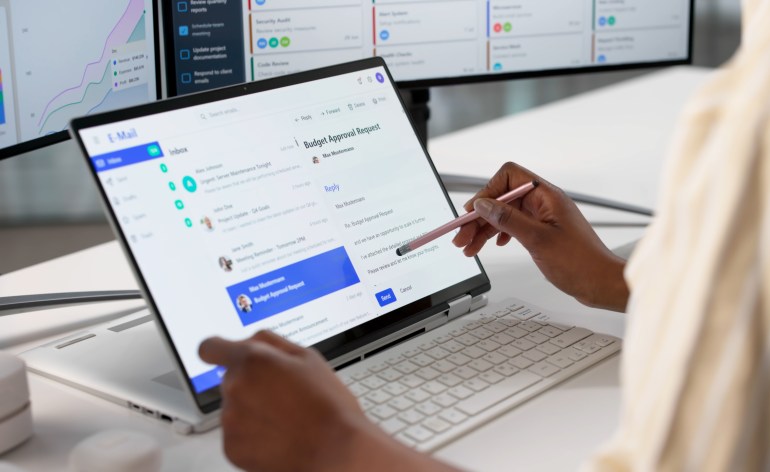 A product decision needs sign-off from three people: one in San Francisco, one in New York, one in London. Nobody can find a 30-minute slot that works for all three within the same week. So, the San Francisco lead types up the decision context, the options, and her recommendation in a shared doc. The New York lead adds comments by end of his day. The London lead reads both perspectives the next morning, adds a dissenting view, and by the time San Francisco wakes up, the thread has a clear decision with documented reasoning. No meeting, no 7 a.m. call, and a written record anyone on the team can reference later.
That’s async-first working the way it should. Not as a backup when calendars fail, but as the primary mode for most decisions. In practice, three habits make it stick:
Write status updates instead of speaking them. A 3-minute recorded walkthrough or a structured post replaces the 30-minute check-in. Everyone consumes it when their workday starts.
Document every decision in a shared, searchable location. If it’s not written down, it didn’t happen for anyone who wasn’t in the room.
Keep feedback in context. Threaded comments on a document, annotations on a design file, timestamped notes on a recorded walkthrough. Not a meeting to “discuss feedback.”
The real test comes when someone says “let’s just hop on a quick call” and the team has to ask: does this actually need to be synchronous, or are we defaulting to a call because it feels easier right now? For teams spanning three or more time zones, “easier right now” for one person usually means “impossible right now” for someone else.
3. Sync vs. Async: A Decision Framework
Once async-first is the norm, the question narrows: which specific activities earn a spot in the overlap window?
|
Activity |
Sync or Async? |
Why |
|
Weekly team priority alignment |
Sync (overlap window) | Requires live discussion and real-time decisions |
|
Daily status updates |
Async (written or recorded) |
Information sharing; no discussion needed |
|
Design or strategy review |
Sync (overlap window) |
Benefits from real-time back-and-forth |
|
Feedback on a deliverable |
Async (threaded comments) |
Context-rich; respects different work hours |
| Onboarding a new team member | Sync (overlap window) |
Relationship building and Q&A need live interaction |
|
Conflict resolution or sensitive topics |
Sync (overlap window) |
Tone and empathy require real-time presence |
| Recurring “check-in” with no agenda | Eliminate entirely |
Consumes overlap time without producing decisions |
If the outcome is a decision or a relationship, it belongs in the overlap window. If the outcome is information transfer, it belongs in async. If there’s no clear outcome, the meeting probably shouldn’t exist.
4. Give People a Place to Work That Makes Overlap Calls Sustainable
 Time-zone coordination is an operating-model problem, but it plays out in physical space. For distributed teams spanning three or more time zones, at least one person’s overlap call falls outside standard working hours. That person is taking a high-stakes video call from a home environment that has shifted into morning chaos or evening wind-down, with no dedicated workspace, inconsistent audio, and every household distraction competing for attention.
A coworking membership or on-demand meeting room booking turns that problem into a solved one: a room with a door, a decent microphone, good lighting, and no household interruptions, even when the window falls at 7 a.m. or 7 p.m. If your overlap hours fall outside the standard workday, here’s what to check before committing to a space:
Access hours. Many coworking spaces operate 9-to-6. If your window starts at 7 a.m. or runs past 7 p.m., confirm that the membership tier you’re buying includes early/late or 24/7 keycard access. Ask the operator directly: can I get into the space and a meeting room at 7 a.m. on a Tuesday?
Meeting room availability at your actual hours. Even if the building is open, rooms may not be bookable outside core hours, or they may be locked and missing the AV setup you need. A room you can access but can’t use for a video call defeats the purpose.
AV quality. Your overlap window is your team’s only real-time collaboration time. The calls in that window are decision-making moments, not casual check-ins. Test the room before committing: sit in the far seat, call someone in, and check whether the audio is clear, the camera frames you naturally, and the lighting doesn’t turn you into a silhouette.
Quiet workspace nearby for prep and follow-up. Overlap calls rarely happen in isolation. You usually need 20 minutes before and 15 after. A quiet desk or focus pod near the meeting room keeps the whole sequence professional.
Keep the commute short. If your overlap window falls at 7 a.m. or after 6 p.m., a 30-minute drive to a downtown location isn’t realistic, so look for a space within a 10–15 minute radius of where you live, not where your company’s anchor office sits.
5. Set the Norms and Make Leadership Go First
Written norms only hold when the people with the most power follow them visibly. A response-time policy means nothing if leadership sends Slack messages at 10:30 p.m. and expects answers within the hour. The unwritten norm becomes “always on, no matter what the handbook says,” and the people in the latest time zones absorb the damage.
Four norms worth codifying and enforcing:
Expected response times by channel. Slack: same business day. Email: 24 hours. Project board comments: 48 hours. If something is genuinely urgent, call. Everything else waits. This protects the people in the latest time zones most, since they’re the ones most vulnerable to after-hours pressure.
No-meeting blocks across all time zones. Designate specific hours as meeting-free and make them non-negotiable, including for leadership. If the VP of product can’t book that block, neither can anyone else.
Recording and notes for every sync meeting. Anyone who couldn’t attend should get 90% of the value from the recording and summary within 10 minutes. If your meetings don’t produce artifacts that work for absent team members, you’re penalizing someone on the team every single time.
Rotate the inconvenience. The person in the latest time zone shouldn’t absorb all the late calls. Rotate meeting times so the cost is shared across regions rather than falling on the same team every week.
About 58% of employees say working too many hours is the leading driver of burnout, with workload pressure and work-life imbalance close behind. Teams that impose rigid, real-time expectations on workers in non-core time zones aren’t being disciplined. They’re accelerating attrition among the people least positioned to push back.
The Bottom Line
The infinite workday is what happens when distributed teams try to collaborate in real time across time zones without designing around the constraint.
Shrink the synchronous window to what genuinely requires live interaction. Build async habits so decisions are documented and accessible regardless of when someone logs in. Give people professional workspace that makes their overlap obligations workable: a room with a door and a decent mic at 7 a.m. beats a kitchen table every time. And make sure leadership models the same norms they set for everyone else.
The teams that get this right don’t just avoid burnout. They move faster, because nobody’s waiting for a meeting to make a decision that could have been made in a document three hours ago. Start by searching for flexible workspace on CoworkingCafe; the space that fits your overlap window is the one worth booking.