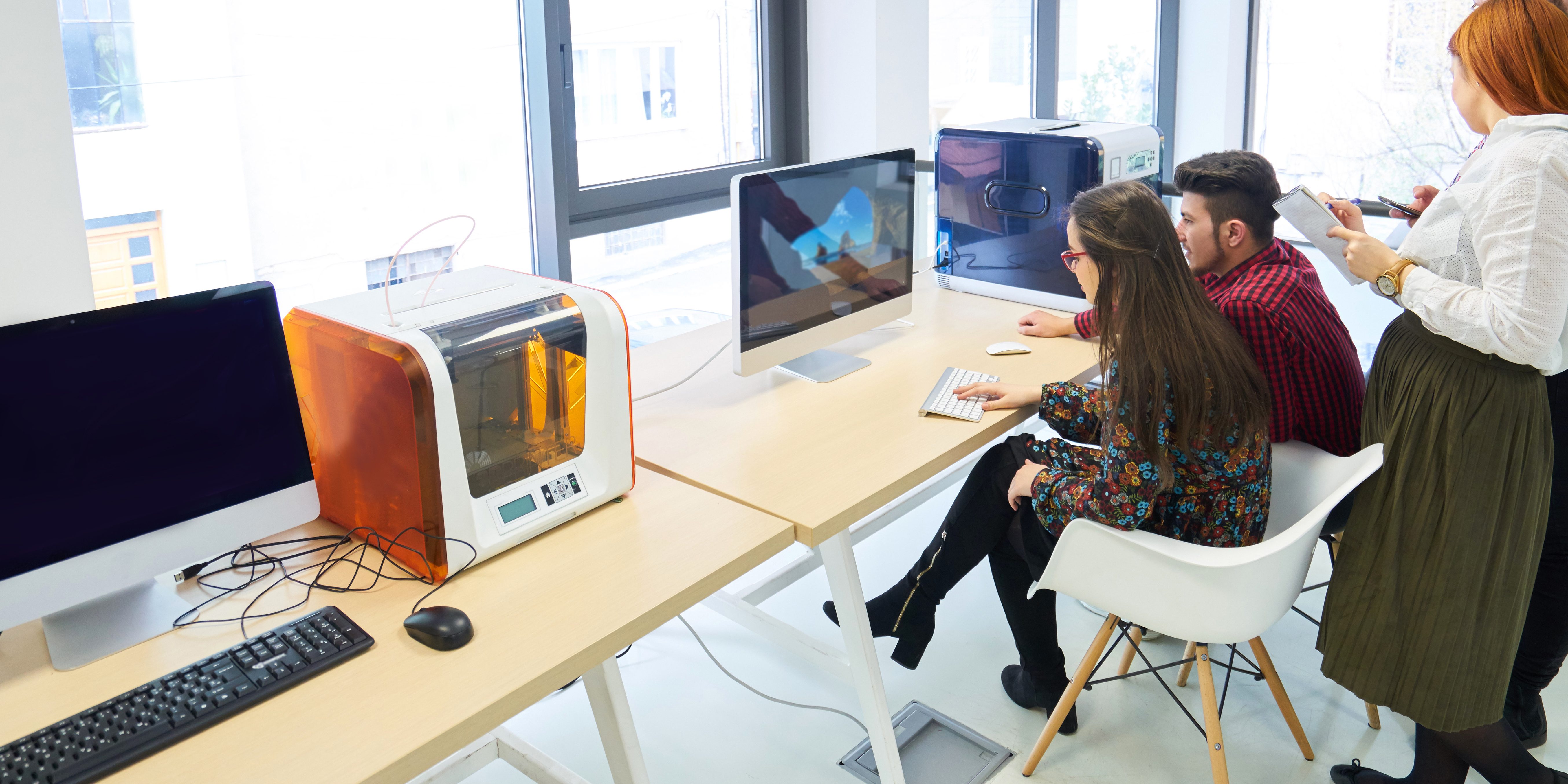
If you’re running a team of 3 to 15 people out of a coworking space, you already know the upside: lower overhead, flexible terms, and amenities you’d never budget for on your own. What you may not have figured out yet is how to actually work well in that environment, day after day, without your team becoming the floor’s noise problem or losing half a morning to “where are we sitting today?”
Shared office habits are the small, repeatable routines that solve this: how you leave your desk, when you book rooms, how you handle calls, and whether you ever talk to the people ten feet away from you.
The habits below are organized into three categories (Space, Schedule, and Social), and every one of them takes five minutes or less. Most sound obvious, but almost nobody does all of them consistently.
Key takeaways
The habits that matter most are:
- wiping down your desk and clearing personal items at the end of each day
- pre-booking desks or rooms before arriving
- routing all calls to phone booths or meeting rooms
- blocking focused-work windows on a shared team calendar
- consolidating tool notifications into a single check-in per hour
- attending at least one community event per month
- introducing your team to one neighboring business per quarter
Why These Habits Matter More Than You Think
Here’s something we notice across our platform that productivity research doesn’t capture: teams of 5 to 10 tend to have the hardest adjustment period in coworking spaces. Solo workers adapt quickly because they only manage themselves. Larger teams (15+) usually negotiate private offices from day one. But that mid-range team (big enough to generate internal noise, small enough to still be on open desks), hits the most friction in the first few months. The habits below are built for exactly that group.
The financial stakes reinforce why getting this right matters. Our data shows that a team of 10 using dedicated desks in Boston saves roughly $95,000 per year compared to a conventional office lease. In New York City, savings exceed $62,900 annually. (The city-by-city numbers are in our cost comparison between coworking and traditional office leases.)
Those savings exist because coworking memberships bundle cleaning, furniture, internet, and amenities into a single monthly fee (national median: around $220/month). When members leave messes in common areas, monopolize meeting rooms, or ignore booking systems, they chip away at the value of that bundle for every person on the floor.
Meanwhile, a 2024 Slack survey of 2,000 U.S. small business owners found they lose an average of 96 minutes of productivity every day, roughly three weeks per year, with non-work distractions (57%), procrastination (47%), and waiting on status updates (28%) topping the list. In a shared office, where distractions come from both your own team and everyone else’s, those numbers climb fast.
A Scenario That Might Sound Familiar
A five-person marketing agency moves from home offices to a dedicated desk membership at a coworking space. Within two weeks, three things go wrong.
- Two account managers take back-to-back client calls at their open desks, prompting noise complaints from a neighboring startup.
- On Tuesdays and Wednesdays (the busiest days in most spaces), team members spend 15 to 20 minutes each morning sorting out seating because no one booked in advance.
- The space hosted a members-only mixer that nobody from the agency attended, where a potential referral partner mentioned they’d been looking for a marketing vendor.
Three habits would have prevented all three problems: routing calls to phone booths, pre-booking desks the night before, and assigning one person to show up at the next event.
The 5-Minute Habits Matrix
Each habit below takes five minutes or less, requires no additional spending, and targets a specific friction point common in shared offices. Use it as a quick-reference guide for your team.
| Category | Habit | Time Required | Problem It Solves |
|---|---|---|---|
| Space | Wipe down your desk and clear personal items at end of day | 2–3 minutes | Prevents mess buildup; keeps shared or hot desks usable for others |
| Return shared equipment (chargers, adapters, whiteboard markers) immediately after use | 1–2 minutes | Eliminates “missing supply” frustration across the floor | |
| Route all calls and video meetings to phone booths or meeting rooms | 1 minute (booking) | Reduces noise complaints and protects focus for neighboring members | |
| Schedule | Pre-book desks or rooms the evening before your office day | 2–3 minutes | Removes morning confusion on peak days (Tuesday through Thursday) |
| Block a focused-work window (minimum 90 minutes) on the shared team calendar | 1 minute | Protects deep-work time from ad hoc interruptions and meetings | |
| Batch tool notifications into a single check-in per hour | 3 minutes (setup, one time) | Cuts context switching, one of the top reported productivity killers | |
| Vacate meeting rooms at least 2 minutes before your booking ends | 2 minutes | Prevents scheduling pile-ups and reduces tension with other members | |
| Social | Assign one team member per month to attend a community event | 5 minutes (coordination) | Captures networking and referral opportunities without pulling the whole team |
| Introduce your team to one neighboring business per quarter | 5 minutes | Builds trust and may surface collaboration or client referrals | |
| Flag facility issues (jammed printer, empty supplies) to staff instead of ignoring them | 1 minute | Keeps shared amenities running and builds goodwill with operators |
Space Habits: Managing Your Physical Environment
Clean as you go, every day
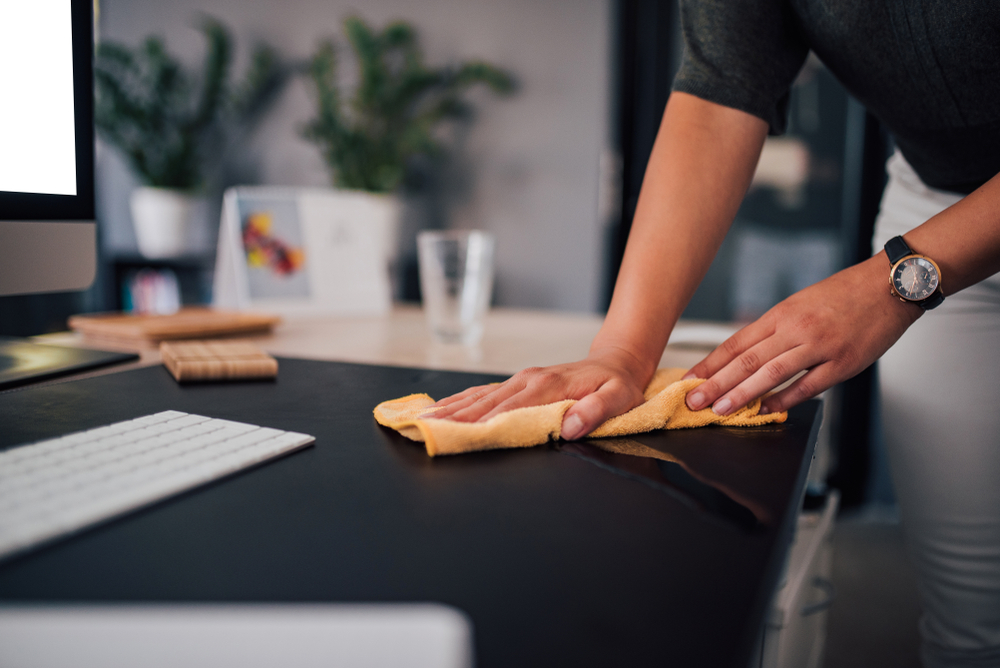
The most important habit on this list, and the one people most often think they’re already doing. A real end-of-day reset means clearing every personal item, wiping the surface, and pushing in your chair. Two minutes.
If your team uses hot desks or rotates seating, our hot-desking guide covers clean-desk policies and storage workarounds that make this easier.
This ranks first because it’s the habit other members notice immediately. A cluttered desk signals to your neighbors and your operator that your team doesn’t take shared resources seriously. Rightly or not, it sets a tone.
Return shared equipment immediately
If you borrow it, return it within five minutes of finishing. No exceptions, no “I’ll bring it back after lunch.”
Here’s the thing nobody warns you about with shared equipment: the annoyance isn’t proportional to the item’s value. Nobody gets worked up about a missing conference table. But a whiteboard marker that’s dried out because someone left it uncapped on their desk for three days? That will genuinely irritate people.
The small stuff carries outsized weight in shared spaces.
Move calls to the right room
That “just one quick call” at your desk is never quick, and the person next to you trying to write a proposal can hear every word of it. If your team regularly has back-to-back calls, factor booth availability into your daily scheduling (covered below). And if you find that your team is booking two or more hours of booth time per person per day, that’s a signal worth paying attention to. You may be spending more on workarounds than a private office would cost outright.
Our private office vs. hot desk decision tree can help you figure out where that breakeven sits.
Schedule Habits: Coordinating Your Team’s Time
Book before you arrive
Tuesday through Thursday are peak days at most coworking spaces. Pre-booking the night before takes two minutes per person and eliminates morning seating confusion entirely. Forming the habit is as simple as actually using the booking tool every time.
A counterintuitive note: some teams resist pre-booking because they think it limits spontaneity. In practice, it does the opposite, because structure creates space for flexibility. When everyone knows where they’re sitting before they arrive, the first 20 minutes of the day become available for actual spontaneous conversation instead of logistical scrambling.

Protect focused-work blocks
The same Slack survey found that increasing focus was the top strategy every age group identified for reclaiming lost time. Block at least one 90-minute window per day on your shared team calendar and treat it as sacred. Headphones on, notifications off, no shoulder-taps unless something is genuinely urgent.
One thing most guides get wrong about shared offices: the biggest threat to your focus is usually your own team, not the strangers around you. Your neighbor’s phone call is annoying, sure. But it’s the colleague who swivels their chair to ask “hey, quick question” six times a day who actually fragments your work. The calendar block is as much an internal boundary as an external one.
Batch your notifications
Context switching between apps was flagged by 17% of small business owners in the Slack survey as a significant productivity drain. In a shared office, digital noise layers on top of physical noise, and the combination is worse than either one alone. Turn off real-time push notifications and check messages once per hour. One-time setup, about three minutes per device. You’ll be surprised how rarely anything actually needed an immediate response.
Vacate meeting rooms early
Overrunning a booking by even five minutes creates a cascade: the next group is standing in the hallway, their meeting starts late, and by 3 PM three different teams are frustrated with each other. Wrap up two minutes before your slot ends. Clear the whiteboard, grab your things, leave the room ready. If you’re consistently running over, the problem is most likely your meeting agenda.
Social Habits: Engaging With the Community
Rotate event attendance
The habit teams most consistently skip, and the one with the highest potential upside relative to time invested. When everyone feels too busy to attend the space’s networking events, nobody goes, and the opportunity disappears.
Assign one person per month to attend one event and report back with a two-sentence summary of who they met and anything worth following up on. Over a year, that’s twelve events and potentially dozens of new contacts spread across your team.

Introduce yourselves to neighbors
This one sounds obvious, but almost nobody does it. Teams sit ten feet from each other for months without exchanging more than a nod.
Set a low-stakes quarterly goal: have one real conversation with one neighboring team. At the kitchen counter, in the lounge, wherever it happens naturally. Four new relationships per year, zero cost, five minutes each.
Report facility issues instead of ignoring them
Walk up to the community manager when something breaks instead of assuming someone else will. One minute.
Operators notice members who communicate proactively, and that goodwill pays off over time: flexibility on bookings, a heads-up about new amenities, priority consideration when space opens up.
Putting It Into Practice
Don’t hand your team this list on a Monday morning and expect everything to stick. Pick the one category where your friction is worst.
For most teams, that’s ‘schedule,’ because it affects every single workday. Start there. Give it two weeks. Then layer in the ‘space’ habits, which are simpler but require daily consistency. Save ‘social’ for month two, when the team has settled into its rhythm and has bandwidth to look outward.
If you’re still evaluating whether your current space matches the way your team actually works, our guide on choosing a coworking space walks through the factors that matter most.
Habits are uneven. Someone on your team will do the desk reset religiously from day one. Someone else will still be taking calls at their open desk in week three. That’s normal. The goal isn’t perfection. It’s a shared baseline your team can hold each other to without it feeling like policing.
Get that baseline in place, and you’ll stop spending energy on workspace friction and start spending it on actual work. Which is, presumably, why you got the coworking membership in the first place.
Frequently Asked Questions
How do I get my whole team to follow shared office habits consistently?
Pick two or three habits that target your most obvious pain point and introduce them in a brief conversation, not a formal policy rollout. Give it two weeks, then check in.
Expect uneven adoption. You’ll have one person who’s meticulous from day one and another who needs three gentle reminders about the whiteboard markers. That’s just how teams work.
Do these habits apply if we have a private office inside a coworking space?
Most of them. A private office solves noise and seating, but you still share meeting rooms, kitchens, and common areas.
The ‘social’ habits are arguably more important for private-office teams because having a door to close makes it easy to become invisible to the rest of the community.
What is the most common habit small businesses overlook in shared offices?
Community engagement, and it’s not close. Most teams keep their desks tidy and their meetings on schedule but skip every networking event and never learn the names of the people five desks over. Understandable, but it means leaving real referral and collaboration opportunities untouched, month after month.
How do shared office habits affect our costs?
Coworking memberships bundle cleaning, furniture, and amenities into one fee. When members waste shared resources or create extra cleanup work, that pressure eventually shows up as fee increases or reduced amenities.
Think of it this way: the membership gives you access, but it’s the habits that determine whether you actually get the money’s worth of value out of it each month.
Can these habits help with hybrid teams that aren’t in the office every day?
They’re especially useful for hybrid teams, where inconsistent attendance creates its own friction. Pre-booking, shared calendar blocks, and a clean-desk reset matter more when different people are in on different days and nobody can assume their spot will be waiting.
What should I do if a neighboring team’s habits are disrupting mine?
Start with a direct, polite conversation. Nine times out of ten, the other team genuinely doesn’t realize their 4 PM standup is audible across the floor.
If that doesn’t resolve it, bring it to the community manager. That’s literally part of their job, and a good one will find a solution without making it adversarial.