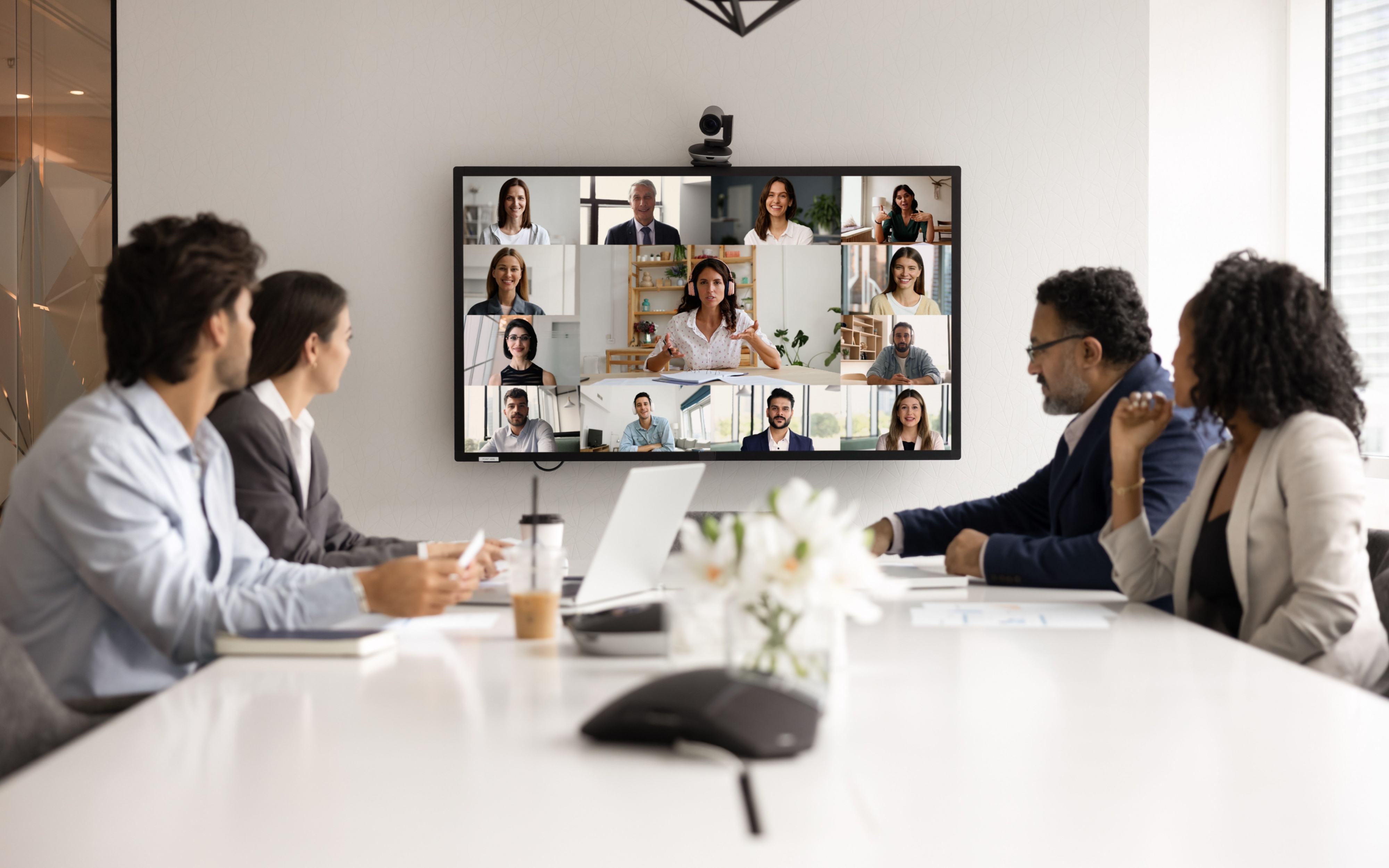
Culture doesn’t live in a building, it lives in the rituals a team repeats on purpose. The most effective distributed teams invest across three ritual categories (digital cadence, periodic in-person, and async artifacts), and they use on-demand coworking space for high-impact gatherings at a fraction of permanent office costs.
The Culture Deficit Is Real, And Permanent Offices Don’t Fix It
Gallup’s State of the Global Workplace: 2025 Report found that just 21% of employees worldwide were engaged in 2024 — down from 23% the year before. The issue extends beyond remote or hybrid arrangements and points to a broader challenge within the way work is structured. But distributed teams feel the deficit more acutely because they’ve lost the casual social contact traditional offices provided by accident: the hallway run-in, the lunch invitation, the overheard conversation that made a new hire feel included before anyone formally tried.
 The reflex response is to bring people back to a permanent office. Here’s the problem: most hybrid offices sit partially empty most of the time. Companies pay full-time rent for part-time presence, and the culture those offices are supposed to generate still depends on whether anyone designs shared experiences once people are in the building.
Meanwhile, the infrastructure for on-demand gathering has reached a scale that makes a different model viable. According to CoworkingCafe’s Q4 2025 U.S. Coworking Market Report the U.S. now has 8,854 coworking locations spanning 159 million square feet, with national median day passes at $30 and meeting rooms at $45 per hour. That’s bookable capacity in virtually every metro where your team members live.
The physical space to gather exists. Most companies already have space available. What they’re missing is a clear ritual playbook that gives in-person time a purpose.
Three Ritual Types That Actually Build Belonging
Most culture advice treats all rituals as the same thing. Here’s what that advice gets wrong: culture rituals serve different functions at different frequencies, and the companies that sustain culture without a permanent office invest across all three types, not just the most obvious one.
Culture rituals for distributed teams are the structured, recurring practices — digital, in-person, and asynchronous — that a company uses to build belonging, alignment, and trust without relying on a shared physical office.
| Ritual Type | Frequency | Typical Cost | Best For | Owner |
| Digital Cadence | Daily to weekly | Near-zero (existing tools) | Maintaining connection between gatherings | Team leads, rotating |
| Periodic In-Person | Quarterly to annually | Moderate (workspace + travel) | Trust-building, strategic alignment, onboarding | People Ops / Ops lead |
| Async Artifacts | Ongoing (permanent) | Time investment only | New-hire assimilation, institutional memory | People Ops + all teams |
Most companies pour energy into digital cadence — Slack channels, Zoom happy hours, emoji reactions. You’ve probably already tried the virtual happy hour. You know how it ends: cameras off by minute twelve, someone’s kid interrupting, a vague sense that the team just lost thirty minutes it won’t get back. These rituals matter at low doses, but they have a ceiling. The other two categories are where the compounding returns live.
For a broader framework on hybrid scheduling and anchor days, see CoworkingCafe’s hybrid cadence guide. This article goes deeper on what to actually do during in-person days and how to build the async infrastructure that sustains everything in between.
Digital Cadence: Brief, Structured, Repeated
Virtual happy hours earned their bad reputation honestly. Unstructured social time on video calls is effortful in a way that break-room conversation is not. You can’t drift in and out, you can’t talk to one person quietly, and “just hanging out” requires everyone to perform presence for a camera. The digital rituals that actually work are brief, structured, and predictable enough to become habit:
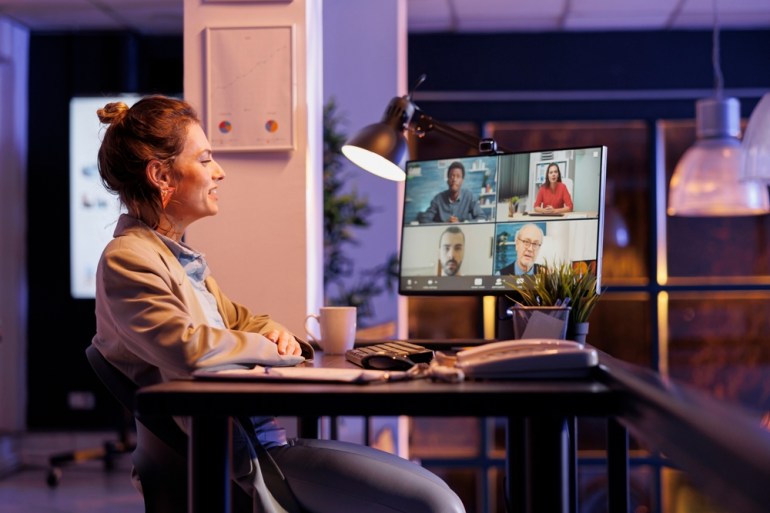 Opening-round check-ins (2 minutes per meeting). Every recurring meeting starts with a non-work question: “What’s the best thing you ate this week?” This sounds trivial. It isn’t. Gallup’s engagement research has consistently found that having a close friend at work is one of the 12 strongest predictors of engagement — and friendships start with small, repeated moments of personal disclosure. A two-minute check-in fifty times a year creates more connection than a single two-hour team-building exercise.
Weekly demo sessions (30 minutes, open attendance). One person shows what they’ve been working on. The audience is voluntary. Creates cross-team visibility — the distributed equivalent of walking past someone’s desk and asking “what’s that?”
Rotating culture captain (one person per week). Responsible for one small gesture — a shared playlist, a conversation prompt, a company digest. Rotating the role distributes ownership of culture instead of concentrating it in HR. One warning from hard experience: if nobody explicitly owns the rotation schedule, the whole thing dies within three weeks. Assign a permanent calendar keeper.
New-hire introduction artifact. Every new hire produces a short video, voice memo, or written introduction within their first week — something personal, not a resume recitation. These live permanently in a shared space, giving future colleagues a starting point for connection.
Periodic In-Person: Where Culture Gets Built in Bulk
Shared physical experience creates trust and memory in ways screens cannot replicate — not because video is bad, but because the moments that form real relationships happen in the margins: the side conversation at lunch, the walk to dinner, the unplanned thirty minutes after a session ends. Those moments don’t happen on a scheduled call.
 GitLab has historically organized annual all-company gatherings to sustain its fully remote model. Dropbox replaced permanent offices with purpose-built collaboration studios under its Virtual First policy (announced October 2020). Both share a principle worth copying: treat in-person time as a concentrated investment, not a daily obligation.
Most companies don’t need that scale. They need a bookable meeting room, a block of day passes, and a clear agenda.
Sample Two-Day Quarterly Gathering
| Day 1 | Day 2 | |
| Morning | All-hands kickoff: quarterly priorities, wins, open Q&A (meeting room, 90 min) | Cross-team working sessions: pairs from different teams tackle a real problem together |
| Midday | Unstructured lunch – no agenda, no assigned seating | Lunch + optional 1:1 walk-and-talks |
| Afternoon | Team-level planning or retrospectives (breakout rooms) | All-hands close: demos, wins shoutouts, new-hire welcomes, next-quarter preview |
| Evening | Group dinner – the highest-ROI social investment of the gathering | Departures |
Why this works: Day 1 afternoon builds trust through small-group real work, not icebreakers. The group dinner matters more than any structured session, if you cut budget somewhere, cut a meeting room hour, not the dinner. Day 2 cross-team pairing prevents the gathering from reinforcing existing silos: pair an engineer with a customer success rep, a designer with someone from finance.
The most common failure mode is over-programming. If every hour is scheduled, you’ve recreated a conference, not a team gathering. The unstructured time (lunch, the walk to dinner, the morning coffee line) is where relationships form. Protect at least 30% of the schedule as open. When the agenda feels a little too empty, it’s probably right.
How to Book Space
Search CoworkingCafe for: Day passes for flexible work throughout both days, plus a reservable meeting room (capacity 20–50) for all-hands sessions.
Filter for: A/V setup (screen, speaker, mic — don’t assume it’s included), catering access or nearby restaurants for group meals, private breakout options for team retrospectives, and enough common-area space (lounges, kitchens, courtyards) for informal interaction between sessions. If the space is all desks and conference rooms with nothing in between, the unstructured moments won’t happen.
Book early: Meeting rooms for 20+ in major metros need 3–6 weeks of lead time — longer during peak seasons (September, January).
Budget math (30-person team, two days):
– Day passes: $30/day × 30 × 2 = $1,800
– Meeting room: $45/hr × 4 hrs × 2 = $360
– Workspace total: ~$2,160 per gathering
In major markets, day passes can run approximately $39/day; secondary markets may be lower. Four quarterly gatherings run roughly $8,640–$10,000 per year in workspace, less than most companies spend on a single month of underused permanent office space, and without the twelve-month lease.
Async Artifacts: Culture That Scales Without Meetings
This is the category most companies neglect entirely, and it may be the most important for long-term durability. Async artifacts are the things a new hire can encounter on day one without attending a single meeting. They do work while everyone is sleeping.
 A living culture handbook (10–20 pages). How decisions get made, how disagreements are handled, what good work looks like here, what the company celebrates. GitLab’s public handbook is the most extensive example, but most companies need something much shorter — written the way you’d explain things to a new teammate over coffee. The failure mode: the handbook that reads like a compliance manual. If it says “employees shall endeavor to maintain a culture of mutual respect,” nobody will read it, and the people who do will learn nothing about how your team actually operates.
Monthly leadership voice memos. Five minutes from a founder sharing something real — a mistake, a hard decision, a customer story. High on honesty, low on production polish. A phone recording from someone’s kitchen beats a polished video that says nothing.
A searchable wins-and-learnings archive. Brief accounts of what shipped, what worked, what didn’t. New hires can browse months of context in an afternoon. The key word is searchable, a Slack channel where posts disappear into the scroll is not an archive.
Onboarding “letters from the team.” Each team maintains a quarterly-updated document answering: “What should a new person know about working with us that they won’t learn from the org chart?” These transmit the institutional knowledge that hallway conversations used to carry.
The power of async artifacts is that they compound. A handbook written today onboards every future hire. A wins archive maintained for two years tells the story of the company’s evolution. A leadership memo recorded in March is still building trust with someone hired in November. Most culture investments depreciate the moment they end. These appreciate.
Frequently Asked Questions
How often should a distributed team meet in person?
Quarterly. Anything less and you’re hoping Slack will do the job. Annual gatherings can work for deeply established remote-first cultures with strong async practices, but most hybrid teams — especially those onboarding regularly — need quarterly two-day gatherings to build the kind of connection that sustains three months of remote work.
What’s the most common culture-building mistake?
Over-indexing on digital social events while under-investing in everything else. If you’re spending more energy planning Zoom socials than maintaining your culture handbook, your priorities are inverted. The rituals with the highest long-term ROI create durable artifacts and shared physical memories — not another trivia night.
Can coworking spaces work for team gatherings?
Yes — and the flexibility is the point. Most of the 8,854 U.S. coworking locations offer both individual workspace and bookable meeting rooms. You get structured collaboration space and informal common areas where unstructured conversation happens. A hotel ballroom gives you the meeting room but not the in-between space. Coworking gives you both.
How do you measure whether rituals are working?
Three indicators: retention among post-office hires, new-hire time-to-belonging (ask directly at 30, 60, and 90 days), and engagement scores on belonging questions. Gallup’s 21% global engagement figure for 2024 provides a useful external benchmark. Qualitative signals matter too. Are people referencing culture artifacts in their work? Are they looking forward to quarterly gatherings, or treating them as mandatory fun? The difference is obvious when you see it.
The Ritual Is the Culture
Start by auditing your current ritual mix against the three categories. If all your investment is in digital cadence and none is in async artifacts, you’ve found your gap. If your team hasn’t been in the same room in six months, you’ve found a different one.
Then do something concrete: search CoworkingCafe for meeting rooms and day-pass workspace in your team’s metro. Use the two-day agenda above as a starting draft, adapt it, but protect the unstructured time. Run the budget math. Send the calendar invite.
Your next quarterly gathering doesn’t need to be perfect. It needs to happen, and then happen again, until showing up together is just what your team does. That’s how rituals become culture.