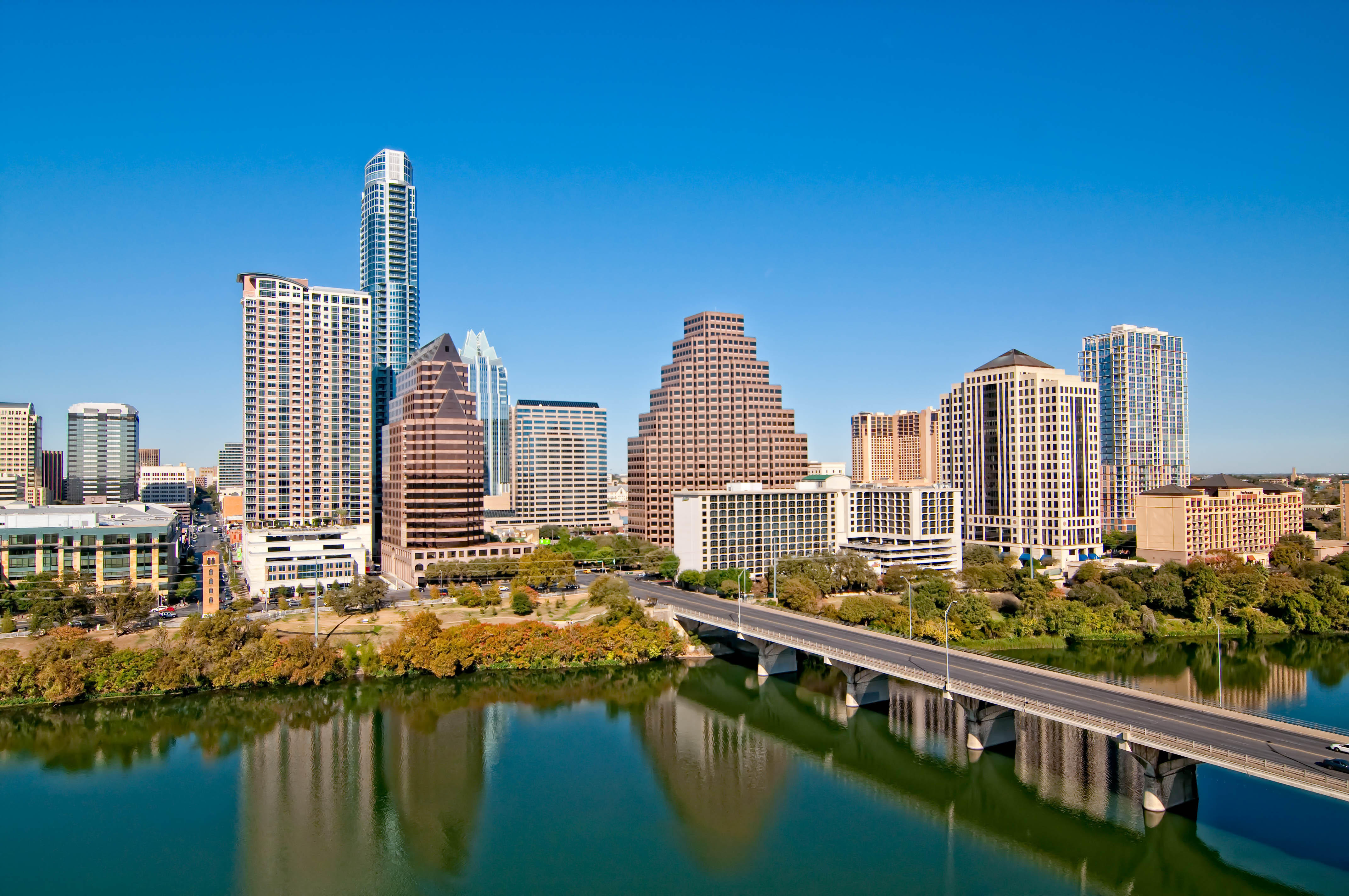
Across the U.S., cities are seeing steady growth driven by business activity, rising incomes, infrastructure upgrades and expanding populations. And, it’s not just the usual hotspots leading the way. Instead, innovation, tech adoption, workforce shifts and global trade changes are reshaping where and how growth happens.
To track this shift, we crunched the latest data from 2019 through 2023 across key metrics like GDP growth, job gains, housing expansion, export strength and infrastructure buildout. The result is a no-nonsense, data-backed list of cities that aren’t following trends — they’re making them.
Additionally, this report breaks down the standouts by size — small (fewer than 250,000 people), mid-sized (250,000 to 500,000), and large (more than 500,000). From smart investments to bold policy moves, these cities are driving America’s next era of economic momentum.
Top Large U.S. Cities for Economic Growth
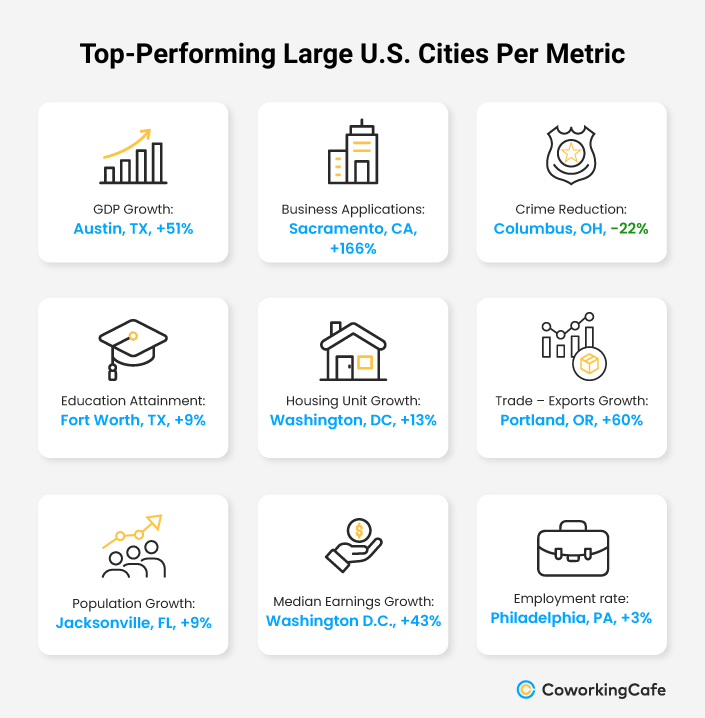
The economic pulse of America’s largest cities continues to beat with innovation, expansion and resilience. In our analysis, cities with populations of more than 500,000 showed varied patterns of growth across several key metrics. Drawing on a mix of productivity, employment and investment data, Austin, TX leads this year’s rankings, followed closely by Sacramento, CA, Jacksonville, FL, Phoenix, AZ, and Fort Worth, TX.
Austin, TX: A Clear Leader in GDP & Broad-Based Growth
Austin claims the top spot with 61 points, driven by a remarkable 51% surge in its gross domestic product fueled by rapid job creation in tech, manufacturing and professional services. The city also saw a 12% increase in housing stock, meaning more residential units were built to meet its growing population, as well as a 4% rise in educational attainment, which reflects a larger share of residents with college degrees or higher.
All of the above are supported by an impressive 33% median earnings increase and a 71% jump in new business applications. To that end, Austin’s diverse economy — spanning tech (with Dell, Apple and Oracle); government (as the state capital); education (home to the University of Texas); and creative industries (such as music, film and gaming) — generated a regional GDP exceeding $248 billion in 2023.
Plus, major developments like Project Connect, a voter-approved transit overhaul, indicate serious long-term infrastructure commitment. While some cooling is evident in big tech hiring and housing demand, Austin’s multi-sector growth makes it the undisputed leader.
Sacramento, CA: A Start-Up Engine With Soaring Business Activity
Sacramento earned nearly 61 points, driven by a jaw-dropping 166% surge in business applications that signals explosive entrepreneurial energy. Here, median earnings climbed 32% from $35,954 to $47,441, and robust gains in employment (20% growth in both construction and manufacturing) and infrastructure show strong fundamentals.
Notably, local efforts like the Business Solutions Center — funded by the American Rescue Plan and offering microgrants and fee relief — and the SizeUp Sacramento analytics platform from the U.S. Department of Commerce are empowering small businesses with real data tools.
Jacksonville, FL: Population Boom Meets Rising Exports
Not to be outdone with nearly 61 points, Jacksonville leads the large-city category with a 9% population jump after adding around 14,000 residents between mid-2022 and mid-2023. At the same time, it also sustained 43% GDP growth, 10% housing development and 25% export gains. The city is also investing heavily in upgrades to its airport, road systems and drainage to support its expanding population.
Meanwhile, major riverfront office projects and improvements downtown reflect strong corporate confidence. What’s more, Jacksonville also boasts a logistics powerhouse in JAXPORT, one of the nation’s largest ports, which contributes more than $31 billion annually and supports 138,500 jobs.
Phoenix, AZ: Twin Engines of Growth in Mesa & Phoenix
Phoenix (combined with Mesa in the metro area analysis) earned 59 points, placing fourth overall. It led the infrastructure category with a 26% increase in total roadway miles, while also posting a solid 42% GDP growth and 12% increase in median earnings. Its balanced performance across housing, trade and employment makes Phoenix a strong contender for long-term economic resilience. Moreover, Phoenix’s recent $29.5 million purchase of 30 acres in the Rio Salado corridor (part of the long-term Rio Reimagined revitalization effort) underscores its investment in future economic resilience.
Fort Worth, TX: High Marks in Education & Exports
Rounding out the top five, Fort Worth scored 59 points, distinguishing itself with the largest increase in educational attainment (+9%) and a robust growth in exports (+40%). The city also posted consistent results in GDP (+36%), housing (+12%) and employment metrics.
Fort Worth combines workforce development with trade expansion — a strategic mix for ongoing prosperity. Furthermore, universities like Texas A&M and TCU are expanding downtown campuses, adding research and innovation hubs that elevate the city’s human capital.
“Workforce is the new currency of economic development. Cities that are serious about long-term growth are investing in talent — not just attracting it, but cultivating it through aligned education, training and upskilling strategies.” – Steven Pedigo, Professor of Practice and Director of the LBJ Urban Lab at the LBJ School of Public Affairs at the University of Texas (scroll down for full interview)
Mid-Sized Economic Powerhouses
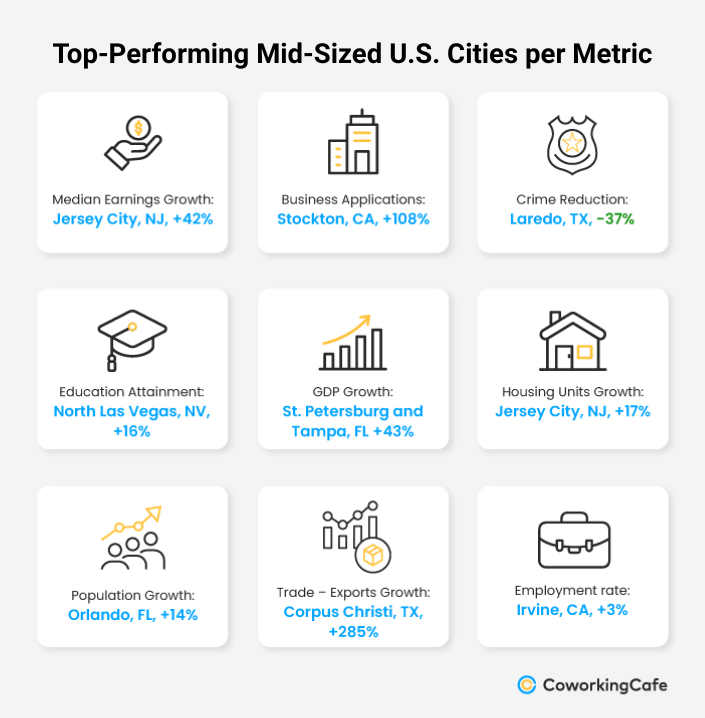
The new data brings clarity: mid‑sized cities aren’t just keeping up with America’s larger ones — they’re writing their own growth stories. Namely, Sun Belt metros in Arizona and Florida are leading the charge in earnings, infrastructure and business dynamism, while strongholds in California and New Jersey emphasize entrepreneurship and wage gains. These regions are growing smarter and faster — merging livability, opportunity and momentum in the post‑pandemic economy.
Gilbert, AZ: Rapid Infrastructure and Earnings Climb
Gilbert jumps to nearly 71 points, anchored by a 32% earnings surge and a 26% boost in roadway miles. But, these aren’t just numbers — they reflect major infrastructure plans, like widening Ocotillo Road and extensions to Northern Parkway, funded via recent capital improvement bonds. Notably, Gilbert’s residents are some of the most educated in the U.S. — 44% hold at least a bachelor’s degree — supporting booming tech, life sciences and healthcare sectors led by employers like Banner Health and Northrop Grumman.
“Educational institutions — especially regional universities and community colleges — are often the most powerful and underleveraged assets in a city’s economy. They serve not just as talent pipelines but as civic anchors, research partners, and conveners.” – Steven Pedigo
Tampa, FL: Diverse Gains Drive Clout
Tampa rises as a new powerhouse this year, after securing second place with a strong 66 points, powered by a remarkable 38% median earnings increase and a 43% surge in GDP. With its continued population growth, improving employment rates and expansions in business activity, the city is cementing its regional importance as a diversified economy beyond tourism.
Orlando, FL: Soaring Population & Earnings
Orlando lands in third place among mid-sized metros, scoring 62 points. Specifically, it leads in population growth (+14%) this year, indicating strong in-migration and housing demand, while median earnings are up by 36%. Orlando’s sustained growth in tech, aerospace and entertainment sectors supports its evolving economic profile.
St. Petersburg, FL: Entrepreneurial Waterfront Play
St. Petersburg shines with a 60-point total, propelled by an 98% jump in business applications and a strong 43% GDP increase. Its waterfront trade advantages and entrepreneurship-friendly policies remain vital, mirroring last year’s nearly doubled exports. St. Petersburg’s dynamic economic environment also cements its status as a hub for innovation and trade. The city benefits from its waterfront logistics (part of Tampa Bay’s regional economy), supportive small-business policy and growing export channels.
Chandler, AZ: Tech‑Heavy, Infrastructure Strong
Chandler comes in at nearly 60 points with 27% median earnings growth and 26% infrastructure expansion. This Phoenix suburb extends Arizona’s tech boom and is home to semiconductor giants, aerospace firms and innovation-driven startups. Here, the East Valley Chamber Alliance is backing ambitious projects like State Route 505 to connect Chandler, Gilbert, Mesa and more, thereby demonstrating a regional commitment to connectivity. At the same time, Chandler’s mix of corporate campuses and commuter-ready streets also bolsters its economic momentum.
From the Shadows of Big Cities, New Economic Stars Emerge
In today’s economy, the next wave of growth isn’t coming from America’s traditional powerhouses — it’s coming from the places you’d least expect. Accordingly, small cities across the country are stepping up, not as satellites to larger metros, but as standalone economic engines.
And, with surging housing markets, fast-rising incomes and booming entrepreneurial ecosystems, these cities are no longer playing catch-up — they’re setting the pace. Whether it’s advanced manufacturing in Idaho, high-tech logistics in Arizona, or Florida’s entrepreneurial momentum, small cities are proving they can deliver big results.
“The spike in business applications shows a clear demand for new economic pathways. But, forming an LLC isn’t the same as building a viable business. Local governments need to go beyond celebration and into support, helping founders navigate permitting, connect with mentors, and access early capital.” – Steven Pedigo
Goodyear, AZ: America’s Smartest Bet
Claiming the top spot, Goodyear leads with explosive growth in education attainment and housing units, in addition to underlying gains in employment and GDP. Once farmland, this Phoenix‑area community has added more than 80,000 residents since 2000 and now exceeds 101,000 people. Some 31.9% hold at least a bachelor’s degree — among the highest shares outside of major metros — and the city is unlocking 5,000 prime developable acres, supported by freeway access and foreign‑trade zone incentives for employers like Sub‑Zero and UPS.
Nampa, ID: The Labor Market Powerhouse
Nampa’s performance is nothing short of elite. It ranks #1 in unemployment reduction and #2 in employment growth with a 40% surge in median earnings and a booming GDP. While it still has room to grow in education, its economic fundamentals are undeniably strong. Clearly, Nampa is becoming a high-output, low-friction job hub.
Port St. Lucie, FL: Florida’s Entrepreneurial Engine
With a 108% increase in business applications, Port St. Lucie is Florida’s new frontier for startups and small businesses. Although trade and infrastructure growth remain moderate, the city makes up for it with booming housing, steady GDP growth, and a population that’s ready to work and build.
Surprise, AZ: Growth With Velocity
Surprise lives up to its name. Ranking #2 in employment, #16 in housing, as well as delivering top-tier GDP growth, the city shows what’s possible when infrastructure and opportunity meet. Though it still lags slightly in education, Surprise is a textbook case of rapid, inclusive development.
Murfreesboro, TN: The Balanced Contender
Unlike its flashier peers, Murfreesboro posts solid numbers across nearly every category — namely, a strong GDP, growing education levels and healthy job creation. Granted, it’s not a trade/export leader, but Murfreesboro is becoming a magnet for sustainable growth and a smart choice for families and businesses alike.
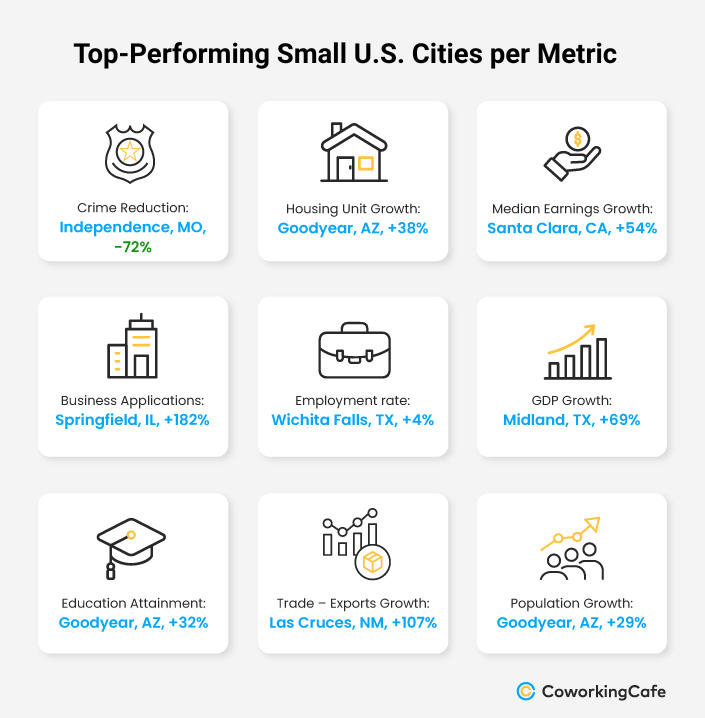 When we look beyond the coasts and legacy tech hubs, it’s clear: America’s next wave of economic leadership is rising from the middle. These cities don’t just show promise — they show proof. With strong education gains, booming housing, low unemployment and high entrepreneurial activity, they are the blueprint for AI-era prosperity.
City Success Decoded: Insights on Talent, Housing & Innovation
 To augment our data-driven analysis, we consulted Steven Pedigo, Professor of Practice and Director of the LBJ Urban Lab at the LBJ School of Public Affairs at the University of Texas. Drawing on extensive experience advising cities on economic development, placemaking, and talent strategy, Pedigo provides a qualitative lens on the forces shaping urban growth in 2025.
His perspective on workforce development, housing affordability, digital infrastructure, and entrepreneurship adds depth to the numbers, helping explain not just what is happening, but why certain cities are outperforming.
- What factors do you believe most influence a city’s ability to sustain long-term economic growth in today’s post-pandemic environment?
Workforce is the new currency of economic development. Cities that are serious about long-term growth are investing in talent — not just attracting it, but cultivating it through aligned education, training, and upskilling strategies. This is where economic development and workforce development converge. When done right, it doesn’t just fill jobs; it fuels innovation. We’re seeing this play out in Burlington, VT, where I’ve worked closely with leaders to reimagine their regional economy. Companies like Beta Technologies are anchoring a next-generation aerospace and electric aviation cluster, supported by education, R&D and workforce training investments.
That kind of ecosystem doesn’t emerge by accident — it takes intentional coordination across institutions. At the same time, growth must be people centered. Quality of place matters — because where people choose to live, learn, and launch ideas is now as important as where the jobs are. Cities that invest in housing, mobility and vibrant civic space create the conditions for resilient growth.
- How should cities balance rapid growth with housing affordability and infrastructure development?
Cities need new tools and a willingness to experiment — because yesterday’s approaches can’t solve today’s scale of challenge. Housing affordability must be treated as both a public and private imperative. It’s about creating the conditions — zoning, financing, public land strategies — that make it feasible for partners to build housing that meets the needs of a changing workforce.
In my hometown of Austin, we’re starting to see bold thinking through initiatives like the HOME Initiative, which enables more diverse housing types across the city and begins to break down barriers to infill development. But it’s not just about the housing unit count; it’s about building communities that support access to schools, transit, broadband, and green infrastructure. Public-private partnerships are essential. Infrastructure — from childcare and transit to water and energy — is a core talent strategy. If we want to attract and retain the right types of talent, especially in knowledge and innovation sectors, we need to ensure our built environment is keeping pace with our ambitions.
- To what extent can strong educational institutions drive regional economic performance, especially in mid- or small-sized cities?
Educational institutions — especially regional universities and community colleges — are often the most powerful and underleveraged assets in a city’s economy. They serve not just as talent pipelines but as civic anchors, research partners, and conveners. The key is treating them as active participants in regional strategy — not just passive education providers. In Chattanooga, the University of Tennessee at Chattanooga played a foundational role in launching the city’s innovation district. Its leadership didn’t just support workforce development — it helped spark a place-based economic transformation rooted in digital infrastructure and entrepreneurship.
We see similar models emerging in places like Greenville, South Carolina, where Clemson University’s presence downtown has fueled advanced manufacturing and design innovation. Or, in San Antonio, where Texas A&M–San Antonio has become an anchor on the city’s south side, catalyzing new investment, workforce partnerships, and civic engagement. When institutions lean in — and when cities invite them in — colleges and universities can become engines of growth, especially in places where other economic drivers are limited.
- What does the rise in business applications tell us about the entrepreneurial climate in fast-growing cities, and how can local governments best support this momentum?
The spike in business applications shows a clear demand for new economic pathways, especially in communities that haven’t always had access to entrepreneurship ecosystems. But forming an LLC isn’t the same as building a viable business. Local governments need to go beyond celebration and into support. We’re seeing cities create concierge-style services for entrepreneurs — helping founders navigate permitting, connect with mentors, and access early capital.
The best models function like economic development on-ramp programs, tailored to the needs of diverse business owners. It’s not just about startup culture — it’s about making entrepreneurship feel accessible, navigable, and supported. Cities that pair this with place-based investment — like commercial kitchen incubators, maker spaces, and small manufacturing hubs — are creating stronger pipelines for community-rooted enterprises. This is how you turn application spikes into sustained entrepreneurial growth.
- How are shifts in remote work and digital infrastructure influencing city-level economic dynamics across different population sizes?
Remote and hybrid work have decoupled jobs from location, and that’s reshaping the economic map. Cities like Tulsa and Northwest Arkansas have seized this moment, offering incentives not just to attract remote workers, but to build new innovation ecosystems around them. These aren’t just talent attraction strategies; they’re talent acceleration strategies. When people have the flexibility to live anywhere, they gravitate toward places that offer more than just a paycheck. That’s where digital infrastructure, neighborhood vibrancy and quality of life become central to competitiveness.
Place matters again, but in new ways. For larger cities, hybrid work is forcing a rethinking of downtowns, office space, and public investment. For smaller cities, the challenge is making sure broadband, childcare, and mobility systems are robust enough to support growth. Either way, digital access is now a core component of economic development — no longer just a tech issue.
Methodology
For this analysis, data was compiled from official government sources to evaluate the evolution of key economic and social indicators from 2019 to 2023. The analysis focuses on the following indicators:
- Business Applications
Source: U.S. Census Bureau – Business Formation Statistics (BFS)
Definition: County-level count of new business applications.
Scoring: Higher values equate to more points (directly proportional)
Maximum score: 15 pts - Gross Domestic Product (GDP)
Source: U.S. Bureau of Economic Analysis (BEA)
Definition: Total value of goods and services produced in the metropolitan statistical area (MSA).
Scoring: Higher GDP equates to more points (directly proportional)
Maximum score: 15 pts - Median Earnings
Source: U.S. Census Bureau – American Community Survey (ACS)
Definition: Inflation-adjusted median earnings during the last 12 months.
Scoring: Higher values equate to more points (directly proportional)
Maximum score: 10 pts - Employment Rate
Source: U.S. Census Bureau – American Community Survey (ACS)
Definition: Percentage of the working-age population that is employed.
Scoring: Higher rates equate to more points (directly proportional)
Maximum score: 10 pts - Unemployment Rate
Source: U.S. Census Bureau – American Community Survey (ACS)
Definition: Percentage of the labor force that is unemployed.
Scoring: Lower rates equate to more points (inversely proportional)
Maximum score: 10 pts - Population Growth
Source: U.S. Census Bureau
Definition: Percentage change in population over a set period.
Scoring: Higher growth equates to more points (directly proportional)
Maximum score: 10 pts - Trade-Exports
Source: International Trade Administration
Definition: Value of goods exported from the metropolitan area.
Scoring: Higher export values = more points (directly proportional)
Maximum score: 10 pts - Crime Rate
Source: FBI – Uniform Crime Reporting (UCR) Program
Definition: Reported crime incidents per population.
Scoring: Lower rates equate to more points (inversely proportional)
Maximum score: 5 pts - Educational Attainment
Source: U.S. Census Bureau – American Community Survey (ACS)
Definition: Percentage of the population with postsecondary educational qualifications.
Scoring: Higher rates equate to more points (directly proportional)
Maximum score: 5 pts - Housing Units
Source: U.S. Census Bureau – American Community Survey (ACS)
Definition: Number of housing units within the metropolitan area.
Scoring: Higher numbers equate to more points (directly proportional)
Maximum score: 5 pts - Infrastructure (Total Roadway Miles)
Source: Federal Highway Administration (FHWA)
Definition: Total miles of roadway within the metropolitan area.
Scoring: More roadway miles equate to more points (directly proportional)
Maximum score: 5 pts
Cities are ranked based on their total scores, with higher scores indicating stronger overall performance. Scores are calculated relative to other cities within the same population bracket, ensuring fair comparison. For each metric, the top-performing city in a bracket earns the maximum possible points, the lowest-performing city earns zero, and all others are scored proportionally in between. In other words, data points are analyzed comparatively, with the extreme values in each bracket setting the highest and lowest possible scores.