
Refining job descriptions and interview questions is always time well spent, however, the physical (or hybrid) environment where these conversations take place are often treated as an afterthought.
That said, an interview office doesn’t need to impress anyone. It needs to work.
When the space is right, candidates settle in faster, interviews flow more naturally, and everyone can focus on what actually matters: learning as much about each other as possible. When something about the space is off, it introduces friction that’s hard to name but impossible not to feel.
Why the Interview Office Plays a Bigger Role Than You Think
Interviews are already high-stakes situations. According to CareerPlug’s 2025 Candidate Experience Report, 36% of candidates have declined a job offer after a negative interview experience, and 70% of job seekers still prefer in-person interviews over video formats. Candidates are thinking about how they come across, interviewers are listening for nuance, and both sides are forming impressions quickly.
Like a mold, the surrounding space quietly shapes all of that.
A space that feels calm, private, and intentional helps people relax just enough to be themselves. A space that feels rushed, distracting, or overly formal can do the opposite, even when the interview itself is well run.
In coworking spaces especially, where interview rooms often serve multiple purposes, the environment becomes part of the experience. The best interview offices don’t draw attention to themselves. They support the conversation without getting in the way.
Choosing the Right Interview Office
Before even thinking about the layout, the first step is choosing the right interview space. Especially since interviews don’t happen every day, most companies don’t have a dedicated space for this, so it’s easy to fall into the trap of following the path of least resistance. If your office doesn’t have a suitable room, booking a private meeting room at a coworking space is often the simplest solution — you get a professional interview space by the hour without committing to a long-term setup. The ‘whatever room is free’ mindset is one of these pitfalls.
Privacy should be high on the list. Candidates tend to speak more openly when they know the room is quiet and enclosed, and interviewers are less likely to rush when they can’t see people passing by outside whether through a frosted glass wall, or worse, a door left ajar.
Room size is another one that’s often overlooked. A one-on-one interview in a large boardroom can feel stiff and performative, while a room that’s too small can feel tense. The most effective interview office is usually somewhere in between: comfortable, human-scaled, and free from unnecessary distractions. More importantly, chosen with the number of participants in mind.
In practice, a strong interview office space usually offers:
- A door that closes and reasonable sound insulation
- Minimal foot traffic or interruptions
- Enough room to feel comfortable without feeling oversized
In flexible environments, this often means being intentional about room selection. Not every meeting room is ideal for interviews, even if it looks polished for team meetings and your usual, routine one-on-one. When browsing coworking interview spaces, prioritize rooms with a door that fully closes, minimal glass walls facing high-traffic areas, and enough seating for your panel size without excess.
 Furniture and Layout: Setting the Tone Without Saying a Word
Furniture arrangement shapes how an interview feels before anyone speaks.
Large desks tend to add distance in early interviews, even when that isn’t the intention. A more conversational setup usually works better. Chairs at equal height, set at a slight angle, make eye contact easier and help the conversation feel less formal.
In practice, effective interview office layouts often include:
- Comfortable, supportive chairs at equal height
- A small table rather than a full desk when possible
- Clear sightlines so eye contact feels natural
For interviews where several team members are present, layout becomes even more important. Slight curves or U-shaped arrangements help avoid the feeling of being questioned across a barrier and make it easier for everyone to engage naturally.
In a well-set-up interview office, the furniture fades into the background.
Lighting and Atmosphere: Quiet Influencers of Comfort
Lighting can instantly change the tone of an interview office. Natural light helps the space feel open and relaxed. When that’s not an option, softer, even lighting works far better than harsh overhead fixtures, particularly for video interviews, where these can produce unwanted glare.
Remember, these details rarely stand out when done well, which is exactly the point. A comfortable interview office atmosphere often includes:
- Even, neutral lighting
- Simple décor that doesn’t distract
- A few natural elements, such as plants or wood finishes
 Temperature, Acoustics, and Physical Comfort
Most candidates will not complain about temperature or background noise, but the discomfort will still be there, nonetheless. In coworking spaces, where activity levels can change throughout the day, choosing an interview office with good sound control also makes a noticeable difference.
An effective interview office maintains:
- A comfortable, consistent temperature
- Minimal background noise
- Clear acoustics without echo
Technology That Supports, Not Interrupts
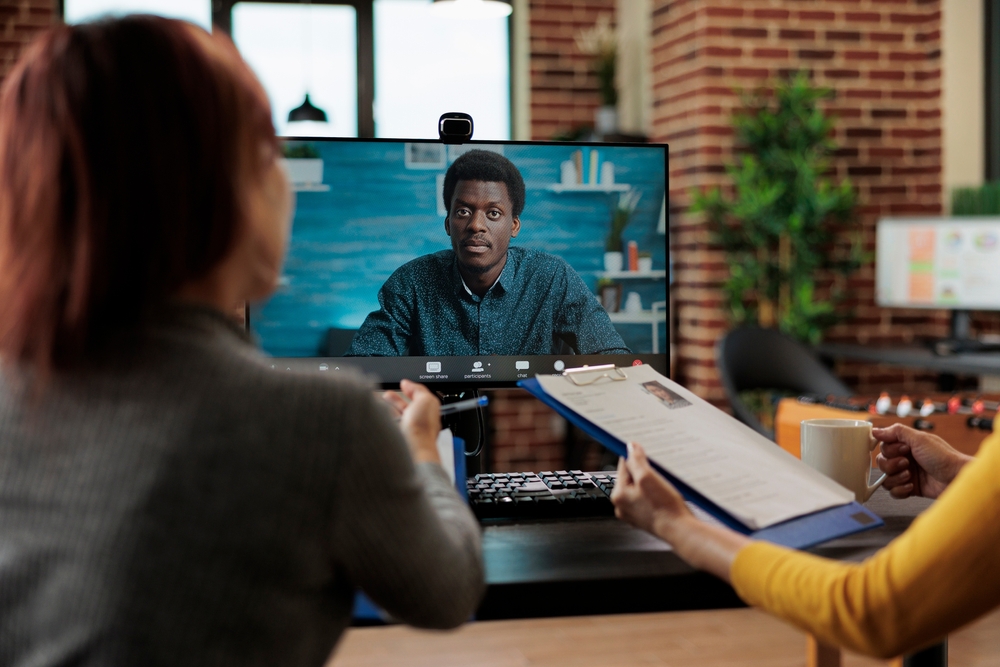
Even in fully in-person interviews, technology plays a role. Modern interview offices should be ready for hybrid setups, an expert that joins remotely, or a quick presentation. That means reliable internet, a screen or monitor when needed, and easy access to power.
At a minimum, your interview office should be equipped with:
- Reliable high-speed internet
- A screen or monitor for video calls or presentations
- Easy access to power outlets and charging cables
The most important step, though, is preparation. Testing audio, video, and connections ahead of time can save some pretty awkward moments.
 Adapting the Interview Office to Different Interview Types
No single setup works for every interview. That’s not to say you need several different spaces just to conduct interviews for different positions. Only that it’s worth taking a minute before each one to make sure all the bases are covered and the setup fits the purpose.
One-on-one conversations benefit from a relaxed, conversational layout. Panel interviews require thoughtful seating and clear acoustics. Skills assessments or presentations may need whiteboards, screens, or extra desk space.
Flexible and coworking environments make this easier by offering:
- Different room sizes
- Multiple layout options
- Technology-ready spaces for hybrid interviews
The Interview Office as a Quiet Advantage
A well-designed interview office won’t be the reason someone accepts a job offer, and will (hopefully) bear even less weight in your decision about your candidates. But it does influence how candidates experience the process, and therefore, how effectively you’re able to evaluate them. When the space supports the conversation, interviews become more focused, more comfortable, and overall, more conducive. Research from HiringThing found that half of employers have lost quality talent due to a poor interview experience, making the interview stage the biggest candidate drop-off point in the entire recruitment pipeline. In hiring, when every second spent with the candidate might reveal something crucial, those small advantages add up.
Frequently Asked Questions
How do I find a professional space for interviews?
If your office doesn’t have a dedicated interview room, coworking spaces are a practical alternative. Many offer private meeting rooms that can be booked by the hour, with the sound insulation, reliable internet, and neutral decor that make for a strong interview setting. Filter by capacity, location, and amenities to find a room that fits the format of your interview.
What makes a good interview room?
A good interview room is private, comfortably sized for the number of participants, and free from distractions. That means a door that closes, reasonable sound insulation, even lighting, and reliable technology for hybrid setups. The furniture should allow for a conversational layout rather than creating a barrier between interviewer and candidate.
Can I book a coworking meeting room for interviews?
Yes. Most coworking spaces offer meeting rooms available for hourly or half-day booking, and many are specifically equipped for professional meetings and interviews. This is especially useful for companies without a permanent office, distributed teams hiring in multiple cities, or any situation where your usual workspace isn’t suited to a private, focused conversation.