Key Takeaways
- Atlanta, GA leads as the top city for remote workers with its strong coworking presence, balanced economy and lively urban lifestyle that create an ideal environment for flexible professionals.
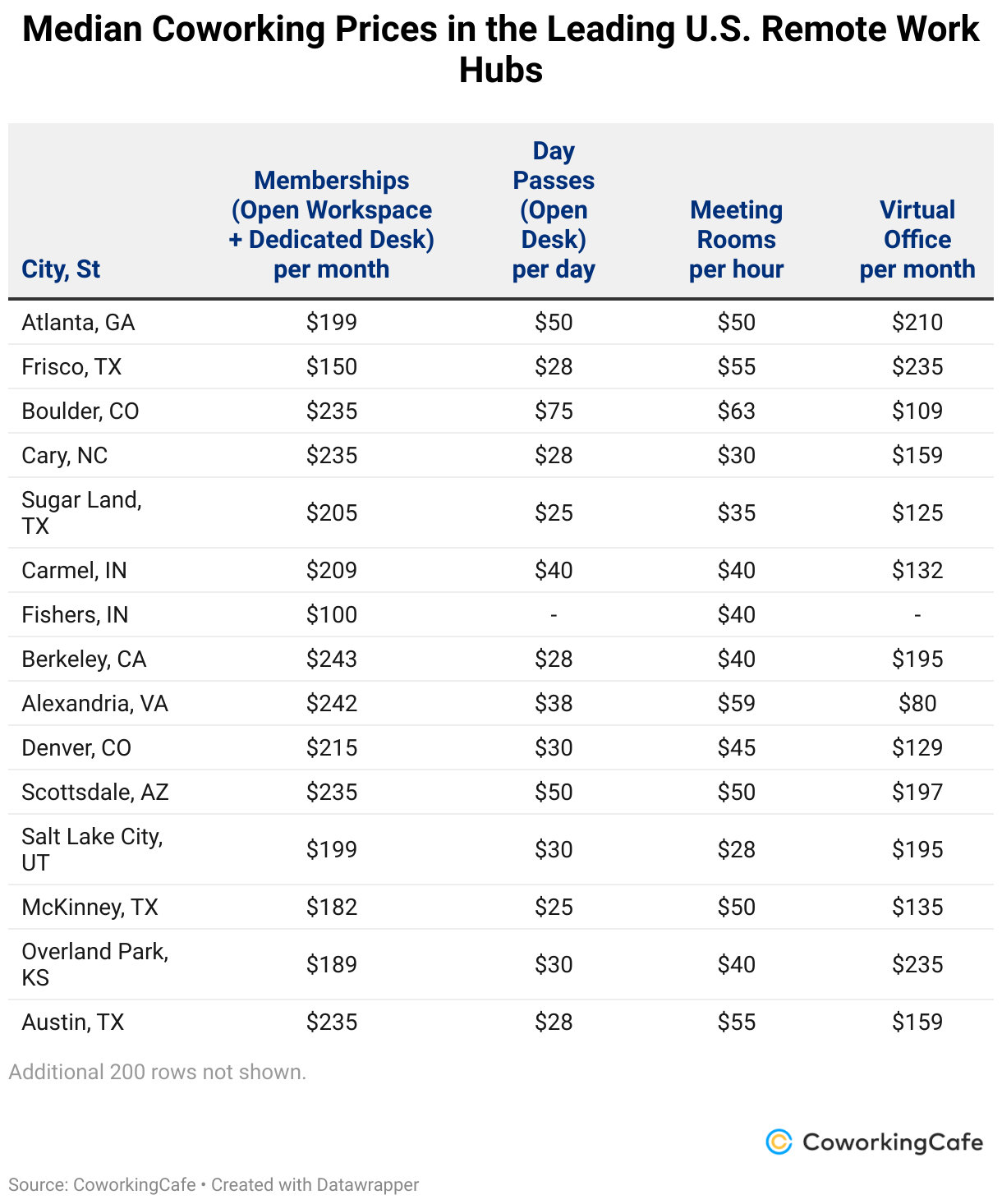
- Fishers, IN ranks first when it comes to economic performance with a strong income and the lowest unemployment rate. It also has some of the lowest coworking costs in the nation, coming in third place with an average of $100 for open workspaces and dedicated desks.
- Frisco, TX and Boulder, CO fall in second and third places as the best cities for remote workers as Frisco comes in first with the highest share of remote workers, 33.7%, and Boulder comes in first for the remote work category as a whole.
- Salt Lake City, UT is the most connected city thanks to its top-notch fiber coverage and public Wi-Fi availability.
- Miami, FL and Columbia, MD are among the top five cities for coworking with a coworking space density of 21 and 17, respectively, per 100,000 residents, as well as moderate coworking prices.
In the years since the world first adapted to large-scale remote work, the once-experimental “new normal” has solidified into a lasting reality: According to recent findings from WFH Research’s Survey of Working Arrangements and Attitudes, a significant portion of the workforce continues to operate beyond the traditional office with around 13% of full-time employees now working fully remote and an additional nearly 27% maintaining a hybrid schedule. Across industries and regions, remote and hybrid models have evolved from temporary solutions into core components of modern business operations.
That said, although remote work allows people to work from virtually anywhere, not all locations are equally suited to support it. Specifically, going into 2026, an ideal city for telecommuting combines reliable digital infrastructure, a flexible work culture, and a lifestyle that encourages both productivity and well-being to ensure a perfect balance between one’s professional and personal lives. It should also minimize logistical hurdles, such as commute time, while simultaneously offering amenities that make work/life balance possible. Zooming in further, the availability and affordability of coworking spaces highlight another dimension of remote work success — the strength of a city’s collaborative and innovation-driven culture, which isn’t always directly reflected in infrastructural or economic indicators.
To understand which places best meet these conditions, we analyzed multiple factors that shape remote work potential and quality of life. These span four key categories — remote work, economy, connectivity and infrastructure — and include metrics such as the local share of remote workers, coworking space availability, broadband access, cost of living and leisure opportunities, among others. Each variable was standardized, scored, and weighted to offer a clear and data-driven comparison across cities. Jump to the methodology for complete data sources and more details.
But, remote work isn’t just about where you live. It’s also about where you choose to work. As such, we also took a closer look at the cities that are redefining the coworking experience going into 2026. These hubs stand out for their high concentrations of flexible workspaces and competitive pricing, thereby creating ideal environments for collaboration, creativity and connection. From bustling urban centers to emerging mid-sized markets, these cities are proving that access to coworking communities can make all the difference in how and where remote professionals thrive.
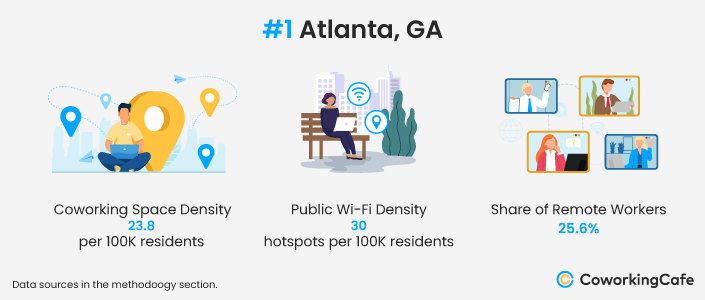
Embracing connectivity and comfort, Atlanta has emerged as the nation’s best city for remote workers. With 26% of its workforce operating remotely and 119 coworking spaces spread across the metro area — the highest coworking density in the country — Atlanta offers endless options for professionals seeking collaboration, flexibility and community.
Yet, what truly sets Atlanta apart is its balance: The city pairs a median income of around $60,600 with a cost of living below the national average and average rent of about $1,600 that keeps urban life within reach. Furthermore, reliable fiber coverage and one of the nation’s strongest public Wi-Fi networks make staying connected effortless, while the city’s world-class airport and lively entertainment scene ensure that remote workers can move, meet and recharge with ease. Accordingly, for those chasing both ambition and affordability, Atlanta delivers the best of both worlds, proving that remote work can thrive in a city built on connection.
 Frisco, TX has earned its place as the nation’s second-best city for people who work from anywhere and everywhere. With more than one-third (34%) of its workforce now remote (the highest share in the study), Frisco’s growing network of coworking spaces and affordable workspace options give freelancers and remote professionals room to thrive, whether they’re building startups or connecting with teams across time zones.
Notably, economic strength is the foundation of Frisco’s success. The city’s median income of about $80,000 and cost-of-living index below the national average make it possible to enjoy a high quality of life without the price tag of a major metro. Plus, with average rent around $1,500 and solid fiber coverage reaching 62%, residents can work efficiently while staying connected to opportunity. Add in Frisco’s proximity to two major airports, its family-friendly neighborhoods, and a fast-growing local economy, and it’s easy to see why this north Texas city has become a model for what the future of remote work can look like — stable, connected and full of possibility.
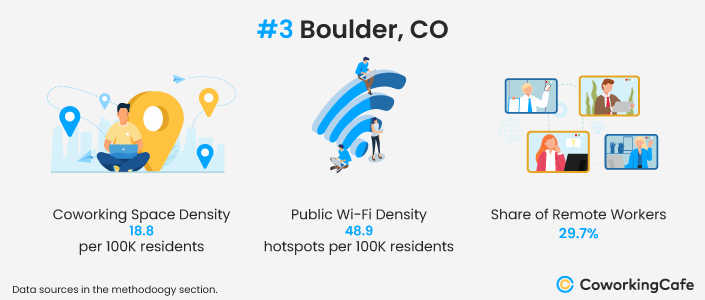 With 30% of its workforce operating remotely and 20 coworking spaces spread across the city (equating to a coworking density of 19 per 100,000 residents), it’s no surprise that Boulder, CO ranks among the top cities in the country for remote work opportunities, as well as third nationwide for remote workers. What’s more, its nation-leading public Wi-Fi coverage and strong fiber infrastructure ensure that professionals can stay connected from mountain-view offices to downtown cafés.
Economically, Boulder balances economic strength with livability. While average rent hovers around $2,000 and living costs run higher than average, the city’s low unemployment rate of 3.4% and steady job market help sustain its workforce. On top of that, it offers easy airport access within 70 miles, walkable neighborhoods and hundreds of entertainment venues. As such, Boulder stands out as a place to work remotely and make the most of every day. Thus, for those seeking both flexibility and fulfillment, Boulder proves that productivity and quality of life don’t have to be at odds, but that they can thrive side by side.
Next, Cary, NC ranks fourth overall, offering an exceptional mix of affordability, connectivity and high quality of life for remote professionals. Here, the city boasts a strong 31% remote workforce supported by 15 coworking spaces per 100,000 residents. With a median income of $75,215; a low unemployment rate of 2.4%; and a below-average cost of living, Cary demonstrates both economic health and quality of life. Excellent airport access and a welcoming Southern charm underscore why Cary stands out as one of the most livable and connected places to work remotely in the U.S.
Then, Sugar Land, TX, follows close behind in fifth place, offering remote workers a lifestyle rooted in both affordability and career opportunities. With 15 coworking spaces per 100,000 people and a thriving professional community (24% of them being remote workers), Sugar Land provides the flexibility and resources they need to succeed. Its strong job market and accessible housing (including an average rent of $1,428) make it especially appealing for those seeking a well-connected city with a small-town feel. For professionals looking to combine career growth with comfort, Sugar Land provides stability with a touch of Southern charm.
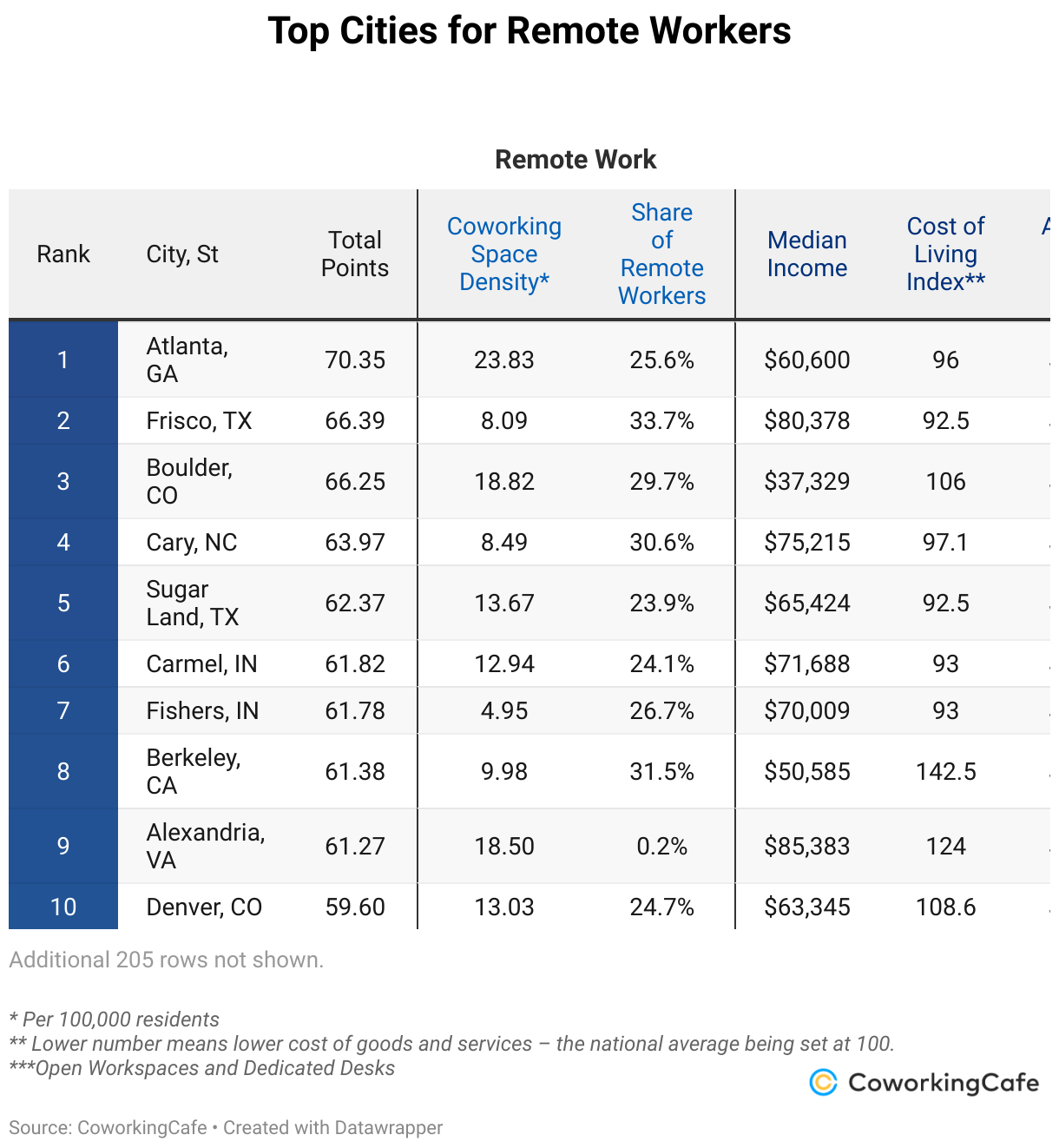
In a landscape dominated by coastal tech hubs, two Midwestern neighbors are quietly redefining what it means to work remotely: Indiana neighbors Carmel and Fishers stand out as the only cities from the Midwest to crack the national top 10 for remote workers. Ranked sixth overall, Carmel, IN has built its reputation on balance: The city pairs the charm of suburban living with the backbone of a digitally connected economy. In fact, nearly one-quarter (24%) of its workforce operates remotely, supported by strong fiber coverage (60%), a median income of $71,688 and an unemployment rate of just 2%. With average rent at $1,451 and a long-standing reputation for livability, Carmel has become a model for how affordability and opportunity can coexist.
Just a few miles away, Fishers, IN takes seventh place, proving that progress, a forward-thinking economy and community development don’t need a big-city skyline. Its median income tops $70,000 and its unemployment rate sits at a remarkable 1%, signaling a strong and steady economy. Though it offers fewer coworking spaces, Fishers compensates with community-focused growth and a close-knit spirit that keeps residents connected, no matter where they work. Together, Carmel and Fishers are adding potential to the remote work scene in the Midwest, showing that, in Indiana, the future of work feels both grounded and full of possibility.
Out West, Berkeley, CA claims eighth place and stands out for its thriving remote work culture. Here, 32% of the workforce is remote — one of the highest rates among all of the ranked cities. Despite higher living costs and rents, Berkeley’s strong connectivity score, walkability, and cultural vibrancy create an exceptional environment for digital workers and entrepreneurs drawn to its innovation-driven ecosystem.
On the opposite coast in ninth place, Alexandria, VA offers a mix of opportunity and access. With about 19 coworking spaces per 100,000 residents; a median income of $85,383; and proximity to Washington, D.C., Alexandria attracts professionals seeking high earning potential and a strong community of remote talent.
Rounding out the top 10, Denver combines a growing economy, 25% remote workforce and abundant coworking options (93 total spaces) with a balanced cost of living. Its access to outdoor recreation and lively urban culture make it a natural fit for remote workers who value both productivity and lifestyle.
Meanwhile, although it didn’t make the top 10, Oklahoma City stood out for affordability, ranking seventh overall in the economy category with a strong income; an average monthly rent of under $1,000; and earning first place for cost of living. Similarly, Lincoln, NE ranked second overall for connectivity with the best fiber coverage in the nation and strong public Wi-Fi density. Despite also falling further behind overall, Cambridge, MA also stood out for being the most walkable city in the nation, whereas St. Louis boasted the highest concentration of entertainment establishments and Providence, RI and New Haven, CT tied for the most airports within a 70-mile radius with 10 each.
Top Coworking Hubs: Density & Affordability – More than Just Numbers
Ranking the best cities for remote workers depends on several factors, but thriving, inclusive coworking ecosystems are determined primarily by the availability and accessibility of flex office spaces. To that end, high density signals professional communities and easier access to collaboration, while reasonable pricing ensures that innovation isn’t reserved for a select few. From Southern business hubs to scenic mountain towns, the top coworking hubs are redefining what it means to work remotely by proving that the best places for coworking are also the best places to build connection, creativity and community.
As a result, Atlanta stands out clearly as the nation’s coworking capital. With the highest coworking density of any ranked city and 24 coworking spaces available per 100,000 people, Atlanta gives freelancers and remote professionals abundant options to collaborate, innovate and stay connected. Plus, the average monthly cost of $199 for open workspaces and dedicated desks makes access to professional, well-equipped spaces remarkably affordable, especially in a city known for its booming startup scene, diverse industries and strong digital infrastructure. From tech entrepreneurs in Midtown to creatives in the Old Fourth Ward, Atlanta’s coworking culture embodies accessibility and ambition.
Not to be outdone, Miami follows close behind, pairing its coastal energy with international business connections that draw professionals from around the world. While slightly higher in price at $235, Miami’s dense network of coworking spaces reflects how deeply remote work has taken root in this fast-paced, globally connected city.
In third and fourth places, Boulder, CO and Columbia, MD show that great coworking ecosystems don’t belong exclusively to big metros. Of course, Boulder’s mountain views and entrepreneurial culture make it an inspiring home for creative professionals, and Columbia offers affordability and access to major East Coast markets without the congestion of larger cities.
Rounding out the top five, Alexandria, VA gives remote workers the best of both worlds with proximity to Washington, D.C.’s professional network and the comfort of a walkable, historic city. Granted, coworking spaces here command a higher average price, but the city’s strong density and prime location make it ideal for professionals who value connectivity and convenience.
In today’s remote work landscape, the freedom to work from anywhere has redefined what it means to build a career and a lifestyle. Yet, as our findings reveal, not every city provides the same balance of opportunity, comfort and connection. Some places simply make it easier — and more enjoyable — to thrive outside of the traditional office.
Ultimately, the best environments for remote work are those that combine strong digital infrastructure, a resilient economy and a bustling community beyond the screen. These cities prove that success in the age of virtual work isn’t just about where you log in. It’s about finding a place where productivity and quality of life truly coexist.
Methodology
CoworkingCafe focused on U.S. cities with at least 200,000 residents that had data for all metrics analyzed.
Data points were analyzed comparatively with the extreme values within the data pool determining the highest and lowest possible scores for each metric.
The total score was calculated using the following data points and weighting:
Economy Score – 45% of the final score
- Cost of living: Composite index for the cost of living. State-level data was used where city-level data was not available.
[Council for Community and Economic Research (2024 – city level)] – 30% - Median income: Median earnings in the last 12 months (in 2024 inflation-adjusted dollars) for population 16 years and older with earnings.
[U.S. Census Bureau – one-year estimates (2024 – city level)] – 20% - Average rent (one-bedroom): Average monthly rent for a one-bedroom apartment.
[RentCafe – 2024] – 20% - Coworking prices*: Median prices for coworking spaces (open workspaces and dedicated desks).
[CoworkingCafe – 2025] – 20% - Unemployment rate: Percentage of the unemployed population.
[U.S. Census Bureau – one-year estimates (2024 – city level)] – 10%
Remote Work Score – 30% of the final score
- Share of remote workers: Share of working population that doesn’t commute to work.
[U.S. Census Bureau – one-year estimates (2024 – city level)] – 60% - Coworking space density*: Number of coworking spaces per 100,000 residents.
[CoworkingCafe (September 2025 – city level)] – 40%
Connectivity Score – 15% of the final score
- Fiber coverage: Ratio of broadband Internet coverage.
[FCC National Broadband Map (city level)] – 60% - Public Wi-Fi density: Ratio of free public Wi-Fi hotspots available per 100,000 residents.
[Wi-Fi-FreeSpot (city level)] – 40%
Infrastructure Score – 10% of the final score
- Walkability: Walkability and pedestrian-friendliness score based on the availability and length of walking routes to nearby amenities, considering every city block, weighted by population density.
[Walk Score (2025 – city level)] – 40% - Density of entertainment establishments: Number of entertainment establishments (categorized by the U.S. Census Bureau as performing arts; spectator sports; museums, historical sites and similar; amusement parks and arcades; other amusement and recreation; drinking places; restaurants and other eating places) per 100,000 residents.
[U.S. Census Bureau – Census Business Patterns (2023 – city level)] – 30% - Airports within 70 miles: Number of airports at a maximum distance of 70 miles
[ClosestAirportTo.com (2025 – city level)] – 30%
* The top coworking cities sub-ranking was determined based only on the coworking space density and coworking prices using a 50-50 weight.
Fair Use & Redistribution
We encourage and freely grant you permission to reuse, host or repost the images in this article. When doing so, we only ask that you kindly attribute the authors by linking CoworkingCafe.com or this page so that your readers can learn more about this project, the research behind it and its methodology.