
Your job posting offers unlimited PTO, a home office stipend, and “flexible work.” So does every other posting in the candidate’s inbox.
Remote work benefits have become table stakes and candidates know it. What separates the companies that consistently attract top remote talent isn’t the presence of flexibility; it’s the specificity of it. And one benefit that’s increasingly separating serious remote-first employers from the rest is coworking access: a monthly stipend or employer-sponsored membership that lets employees work from a professional space near them, on their schedule.
Most HR teams treat this benefit like IT infrastructure. Drop it in the handbook, move on. That’s a mistake. Coworking access, communicated well, is one of the few remote benefits that candidates can immediately picture using. That concreteness is rare. And in a hiring market where “flexible” means nothing, concrete wins.
As recent data on top cities for remote professionals shows, workers are increasingly choosing locations based on workspace access and flexibility, not proximity to a corporate office. Hiring teams realize that coworking matters to candidates but are they communicating it in a way that actually lands?
What “Coworking as an Employee Benefit” Actually Means
Before getting into execution, it’s worth being precise. A coworking benefit is an employer-funded allowance, typically $150–$250/month, that employees use to access professional workspaces on demand. It covers day passes, dedicated desks, or meeting room credits at coworking spaces near them. Some companies administer it as a direct reimbursement; others set up a corporate membership through a platform like CoworkingCafe, which gives employees access to a network of 8,800+ U.S. locations.
Think of it less as a policy and more as the infrastructure that makes a remote-work policy functional.
 Why Coworking Access Is Becoming a Recruiting Differentiator
Remote work flexibility is no longer a differentiator on its own. JLL’s Future of Work research highlights that employees now expect hybrid flexibility as standard, with growing demand for third spaces like coworking hubs to support productivity outside the home. What employees are evaluating now is the quality of that flexibility: Do you trust me to work where I’m most productive? Do you actually support that with resources?
Coworking access answers both. It says: we’re not pulling you back to an office, and here’s money to make remote work actually functional.
The numbers reflect the demand, with a median day pass cost of $30 and monthly memberships averaging $220. At that price point, a full coworking stipend costs less annually than a single business-class flight to a leadership offsite and delivers value 52 weeks a year, not two days. For HR teams building a benefits case to finance, that math matters.
Gallup research reinforces the underlying driver: employees with genuine location flexibility report significantly higher engagement and lower turnover intentions. A coworking benefit doesn’t just attract candidates. Done right, it’s one less reason for them to leave.
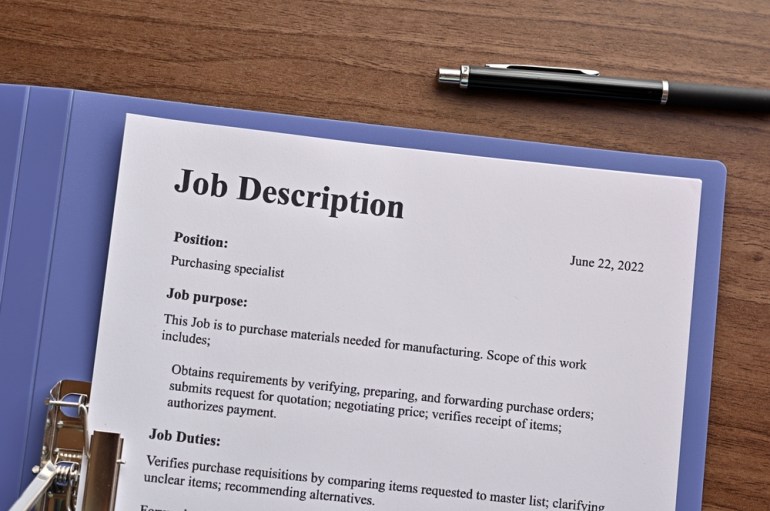
1. How to Write a Coworking Stipend Into a Job Description
Candidates can’t evaluate what they can’t picture, and “coworking benefit available” tells them nothing.
When listing coworking access, be specific about four things:
- The stipend amount. “$200–$250/month” is specific enough to evaluate; “generous coworking benefit” is not.
- What it covers (day passes, dedicated desks, meeting room credits).
- Geographic scope. National network access reads very differently than “a few local spots.”
- How employees access it. Direct platform credit or reimbursement? One of these requires a receipt and a form. Mention which.
Format matters too. Don’t drop coworking into a bullet list of perks. Group it with benefits that support how work gets done, alongside home office stipends, equipment allowances, and async tools. That placement shows that the company understands remote work as an operational reality, not a philosophical stance.
 2. Job Description Language You Can Use Today
Here’s how to surface the benefit effectively across different job description formats:
For the opening paragraph of a remote-first role:
“[Company] is fully remote with an optional coworking benefit, because we know ‘working from home’ isn’t the right environment every day.”
For the benefits section:
“Monthly coworking stipend ($220/month) redeemable at professional workspaces nationwide through CoworkingCafe”
For roles with client interaction or occasional team collaboration:
“Access to on-demand meeting rooms and professional coworking spaces. No need to use a coffee shop for client calls.”
Employers can also highlight coworking’s role in hybrid work strategies as a way to offer structure and collaboration without requiring a full-time office return. For candidates weighing hybrid vs. remote, this framing signals that the company has a real answer to the question, not a shrug dressed up as policy.
3. Match the Framing to the Candidate Profile
An early-career hire and a senior engineer read the same job description differently, and they’ll read “coworking access” differently too.
| Candidate Profile | What Resonates | How to Frame It |
| Early-career / recent grad | Social environment, structure | “Access to coworking spaces for focused work and community” |
| Parent or caregiver | Separation of work and home | “Professional workspace when you need a change of environment” |
| Senior individual contributor | Deep focus, no commute | “Quiet, professional space without commute overhead” |
| Client-facing roles | Meeting room access | “Reservable meeting rooms and professional settings for client work” |
| Collaborative team roles | In-person optionality | “Coworking access for team sprints or collaborative sessions” |
Getting this wrong is easy: a generic “coworking perk available” line reads as an afterthought to every one of these candidates. Getting it right means writing one sentence that makes the right person think that’s exactly what I need.
4. How Leading Companies Are Operationalizing This
Candidates who haven’t used an employer-sponsored coworking benefit often don’t know what to expect. One reference point changes that.
Spotify’s “Work From Anywhere” program is one of the most visible examples. The company lets employees choose where they work, including coworking spaces, and provides stipends to fund professional workspace access. The telling detail: Spotify doesn’t call this a perk. They describe it as a structural decision about how distributed work functions. HR teams adopting a similar benefit should borrow that language, not just the policy. The framing is half the signal.
In interviews and offer conversations, hiring managers can explain coworking access the same way: not as an add-on, but as part of a deliberate approach to distributed work. In a close decision between two offers, “we have a coworking stipend” is forgettable. “Here’s why we set it up and what it covers” is not.
 5. How to Use It at the Offer Stage
Coworking access is one of the few remote benefits that’s both tangible and underused in offer conversations. Most companies mention it in a benefits PDF. Few lead with it.
At the offer stage, try something like this:
“One thing I want to make sure we’ve highlighted: our coworking benefit gives you access to professional workspaces and meeting rooms near you, so remote work here means real flexibility, not just ‘work from your kitchen table.'”
That sentence does three things: it’s specific, it’s candidate-centered, and it implies the company has thought seriously about what remote work actually feels like. Candidates use that kind of specificity to infer broader culture. A company that explains its coworking benefit in concrete terms during an offer call is signaling something about how it treats employees generally.
6. Track Whether It’s Working
If you add coworking access to your recruiting materials, build in a way to measure it. Otherwise you won’t know whether it’s influencing decisions or just taking up space on a benefits page.
Three lightweight ways to track impact:
- Ask in late-stage interviews: “How important is access to professional workspace in evaluating this role?” Baseline responses now; revisit after six months.
- Track offer acceptance rates for remote roles before and after the benefit is surfaced prominently in the process.
- Survey new hires in 30 days: Are they using the coworking benefit? Did it match what they expected when they accepted the offer?
CoworkingCafe data shows the U.S. coworking market growing at 5% quarter-over-quarter, which means the network of accessible spaces expands continuously. Budget it this year; it’s worth more next year. That’s the case you make to leadership when formalizing the stipend, and it’s one of the few benefits arguments that actually gets stronger over time rather than depreciating the moment the equipment ships.
How Coworking Compares to Other Remote Benefits
| Benefit | Avg. Monthly Cost | Perceived Value | Differentiator Potential | Recurring? |
| Home office stipend (one-time) | $500–$1,500 | High at hire | Low (most offer it) | No |
| Internet reimbursement | $50–$75 | Moderate | Low (table stakes) | Yes |
| Coworking access/stipend | $150–$250 | High | High (undersupplied) | Yes |
| Wellness stipend | $50–$150 | Moderate | Low–Moderate | Yes |
| Equipment allowance | $1,000–$2,000 | High at hire | Low (expected) | No |
Coworking access sits in a rare position: high perceived value, low employer adoption, and recurring monthly visibility to the employee. Most differentiating benefits are expensive or one-time. This one is neither.
The Bottom Line
The companies winning remote talent aren’t offering the most; they’re offering the most legible. A coworking benefit candidates can picture using, priced at a number they can evaluate, covering spaces they can actually find: that’s a concrete advantage in a market full of vague promises.
Add it to the job description. Say the number. Explain what it covers. And if a candidate asks how it works in an offer call, answer specifically instead of forwarding a PDF.
Ready to set up coworking access for your team? Explore CoworkingCafe for teams to see how corporate memberships work and give your employees access to professional workspaces wherever they are.